PIXELBANKv8.2.1
Menu
Master the Third Dimension

3D Computer Vision Study Plan

A comprehensive 13-week curriculum covering 3D computer vision from geometric foundations to neural rendering. Camera geometry, stereo vision, point clouds, NeRF, 3D Gaussian Splatting, and generative 3D.

13 Chapters13 WeeksInteractive Demos

Recommended Study Path

Phase 1

Foundations

Weeks 1-2

  • Ch 1: 3D Basics & Coordinate Systems
  • Ch 2: Camera Models & Calibration

Representations, transforms, camera geometry

Phase 2

Geometry & Stereo

Weeks 3-4

  • Ch 3: Epipolar & Stereo
  • Ch 4: Multi-View Geometry

Fundamental matrix, SfM, bundle adjustment

Phase 3

Reconstruction

Weeks 5-7

  • Ch 5: Depth Estimation
  • Ch 6: 3D Reconstruction
  • Ch 7: Point Clouds

Dense reconstruction, mesh generation, PointNet

Phase 4

3D Understanding

Weeks 8-10

  • Ch 8: 3D Detection
  • Ch 9: Scene Understanding
  • Ch 10: SLAM

Detection, segmentation, real-time mapping

Phase 5

Neural 3D

Weeks 11-13

  • Ch 11: NeRF
  • Ch 12: 3D Gaussian Splatting
  • Ch 13: Generative 3D

Neural rendering, novel view synthesis, text-to-3D

Tip: Each chapter includes interactive visualizations and theory exercises.
Pro chapters (3-13) require a premium subscription.

All Chapters

1

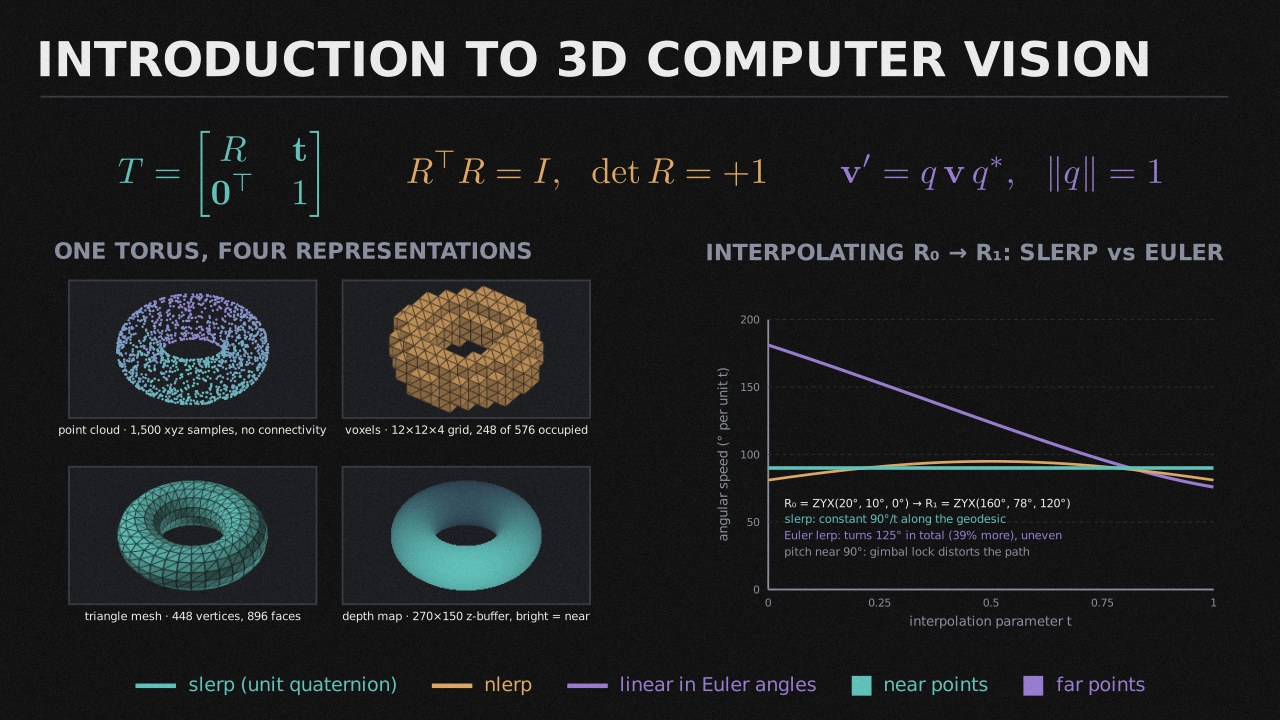
Introduction to 3D Computer Vision

3D representations, coordinate systems, rigid transformations, and the foundations of spatial computing.

3D Representations & Data FormatsCoordinate Systems & Reference FramesRigid Transformations (Rotation & Translation)+4
Start Learning
2

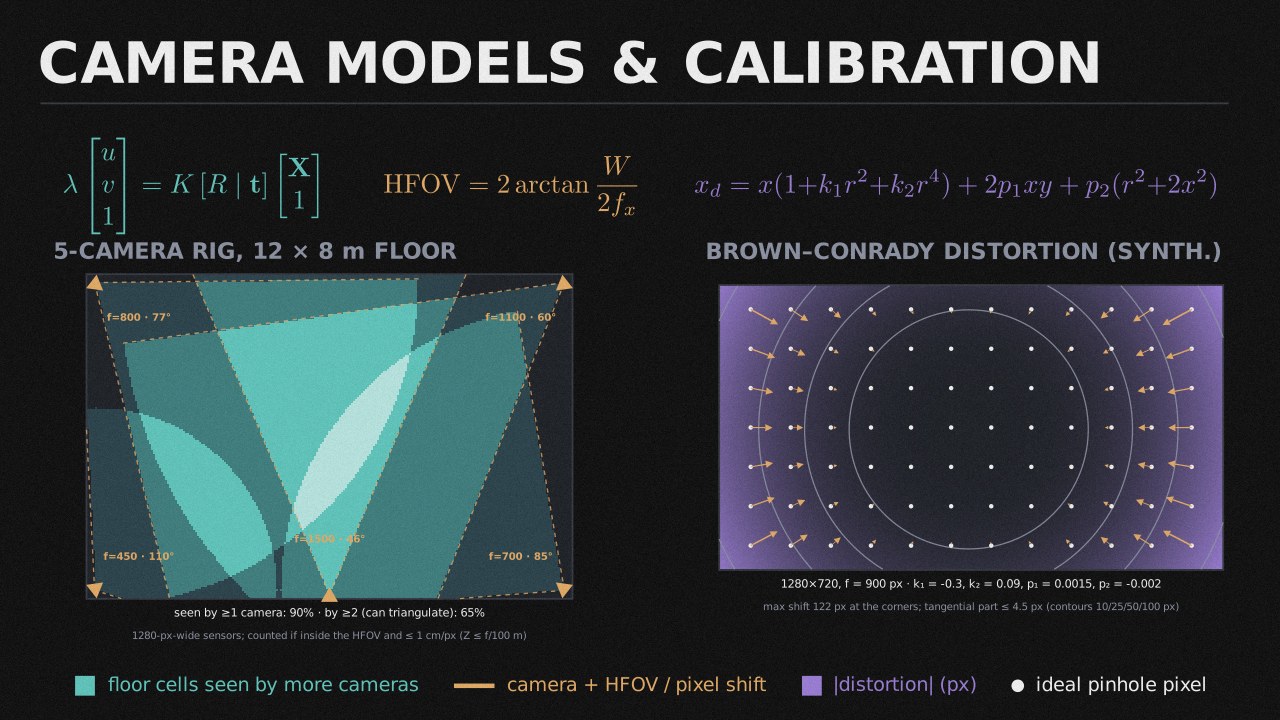
Camera Models & Calibration

Pinhole camera model, lens distortion, intrinsic/extrinsic parameters, and calibration techniques.

The Pinhole Camera ModelLens Distortion ModelsIntrinsic Parameters & Camera Matrix+4
Start Learning
PRO

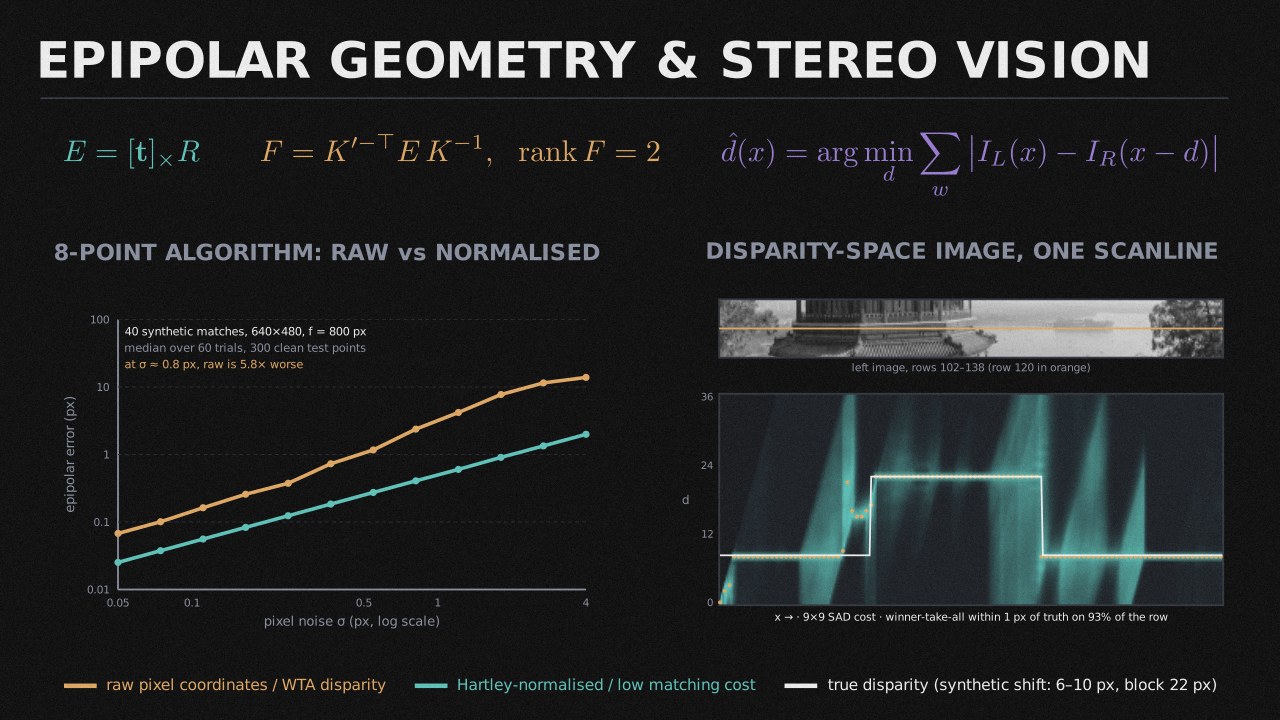
Epipolar Geometry & Stereo Vision

Fundamental and essential matrices, stereo rectification, matching algorithms, and disparity estimation.

Epipolar Constraint & GeometryThe Fundamental MatrixThe Essential Matrix+4
Pro Only
PRO

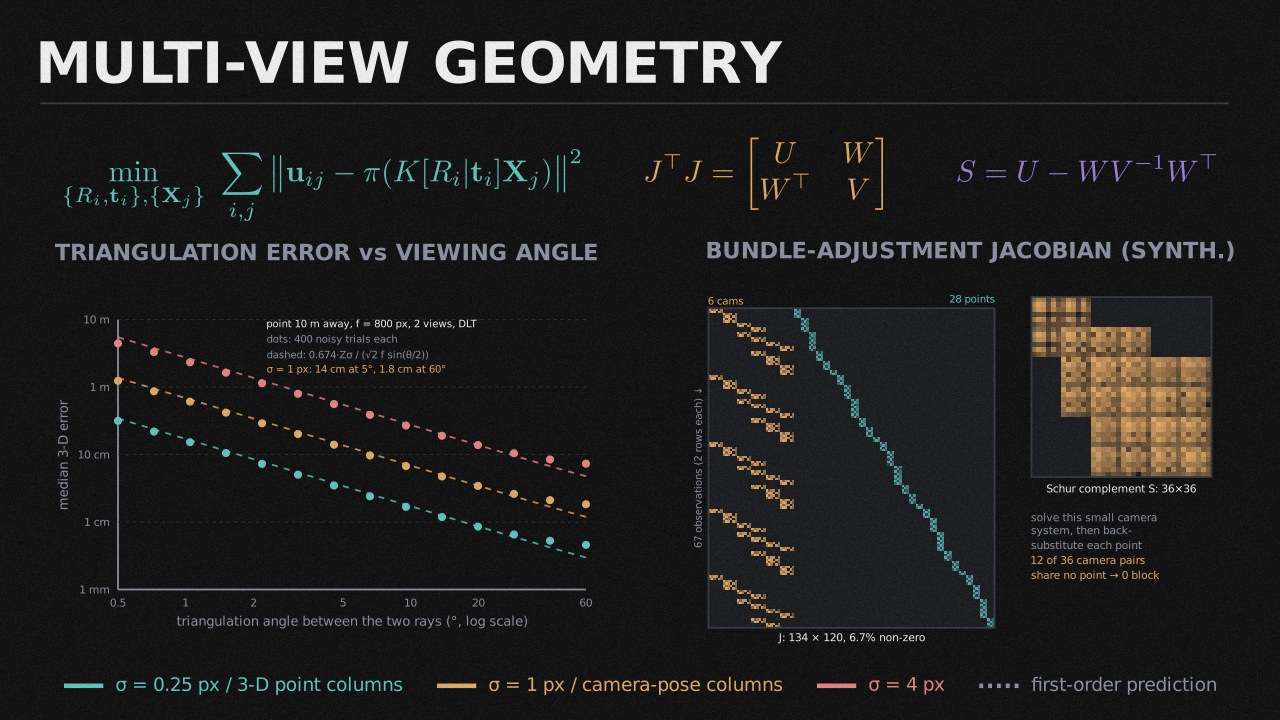
Multi-View Geometry

Structure from Motion, bundle adjustment, COLMAP pipelines, and multi-view reconstruction.

N-View Geometry & Trifocal TensorStructure from Motion (SfM) PipelineFeature Matching Across Views+3
Pro Only
PRO

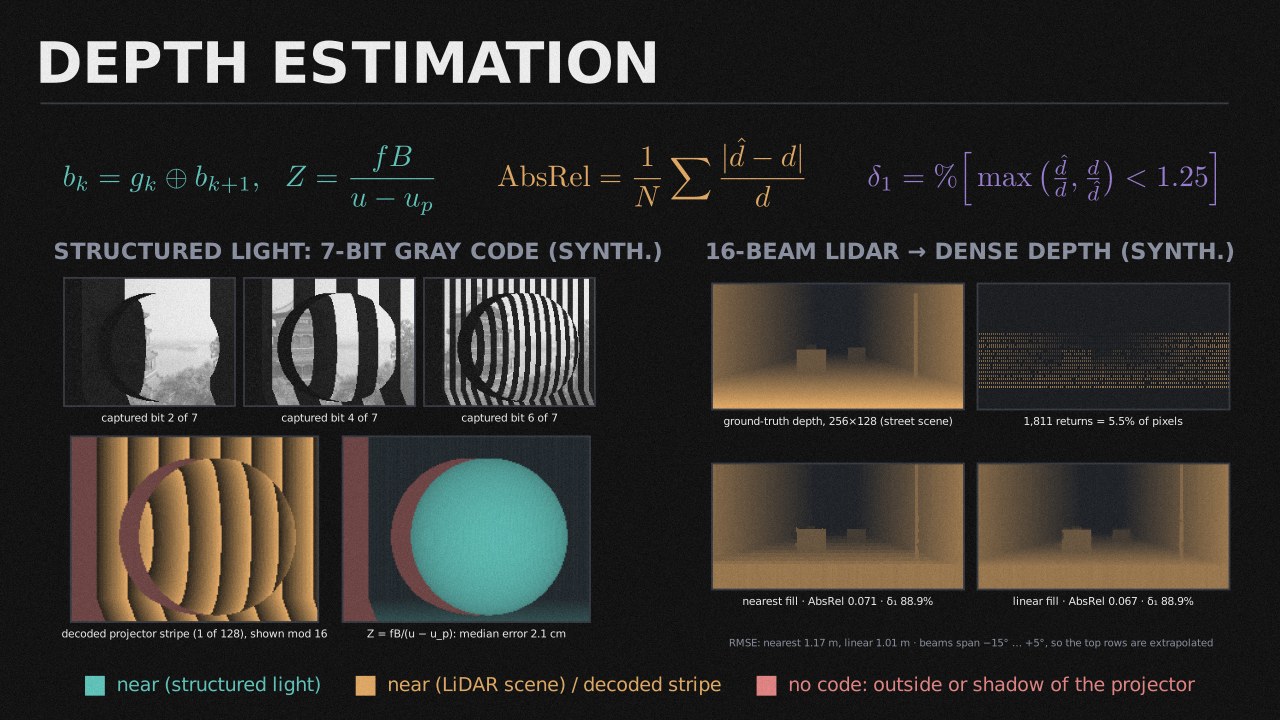
Depth Estimation

Monocular depth networks, multi-view stereo, active sensing with LiDAR and structured light.

Monocular Depth EstimationMiDaS & DPT ArchitecturesMulti-View Stereo (MVS)+4
Pro Only
PRO

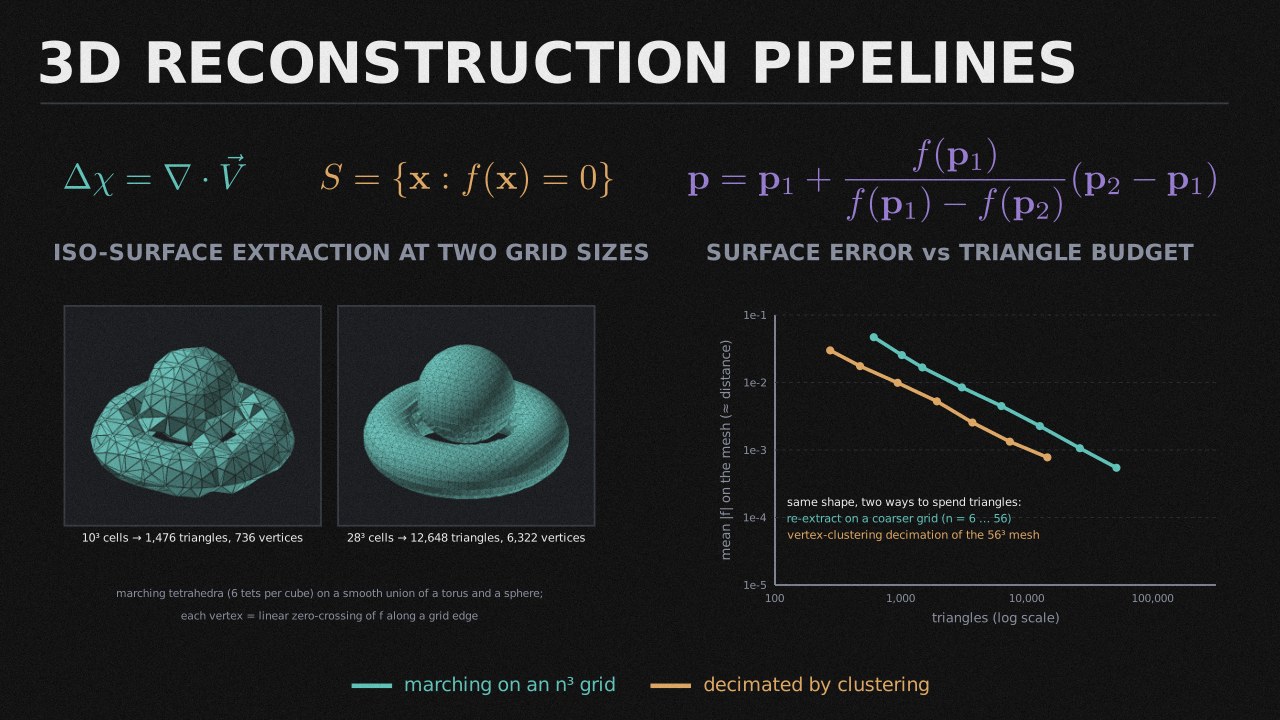
3D Reconstruction Pipelines

Photogrammetry, mesh generation, Poisson reconstruction, signed distance functions, and texture mapping.

Photogrammetry PipelineMesh Reconstruction from Point CloudsPoisson Surface Reconstruction+4
Pro Only
PRO

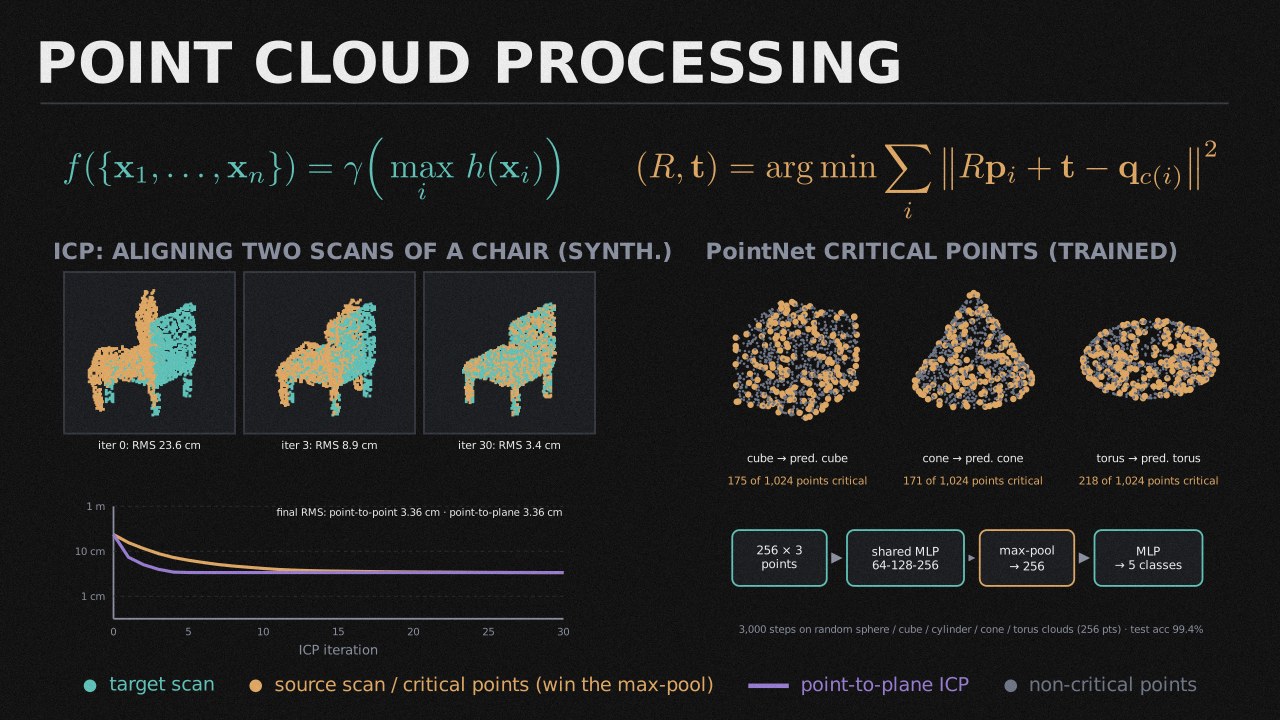
Point Cloud Processing

PointNet architectures, 3D convolutions, voxelization, segmentation, and registration with ICP.

Point Cloud FundamentalsPointNet ArchitecturePointNet++ & Hierarchical Features+4
Pro Only
PRO

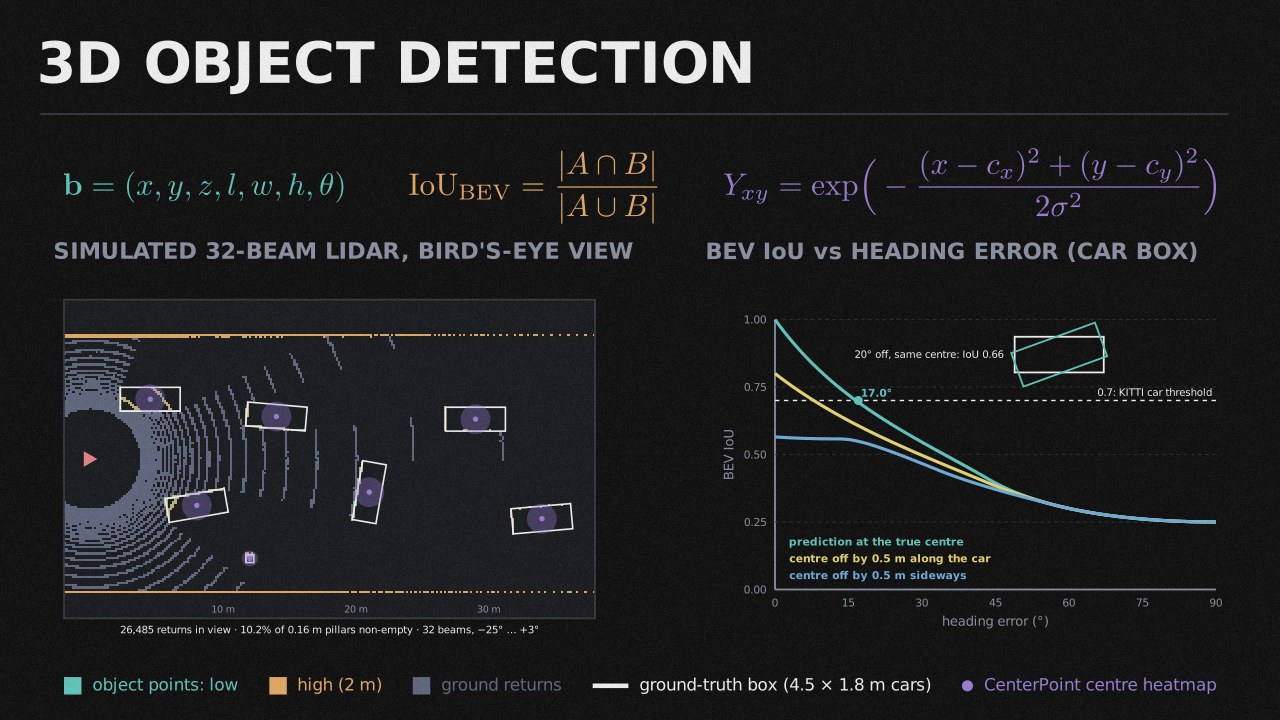
3D Object Detection

VoxelNet, PointPillars, CenterPoint, BEV detection, sensor fusion, and evaluation.

3D Object Detection OverviewVoxelNet & Voxel-Based DetectionPointPillars+4
Pro Only
PRO

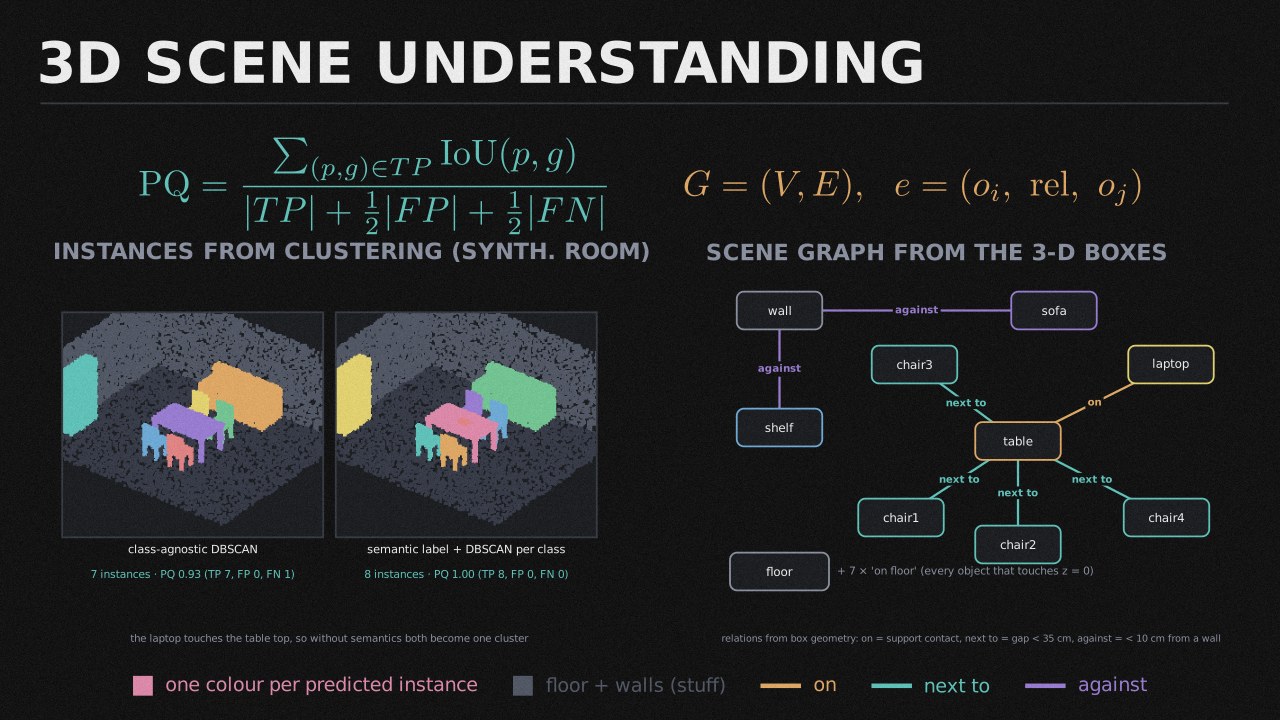
3D Scene Understanding

Semantic and instance segmentation in 3D, scene graphs, occupancy networks, and indoor reconstruction.

3D Semantic Segmentation3D Instance SegmentationPanoptic Segmentation in 3D+3
Pro Only
PRO

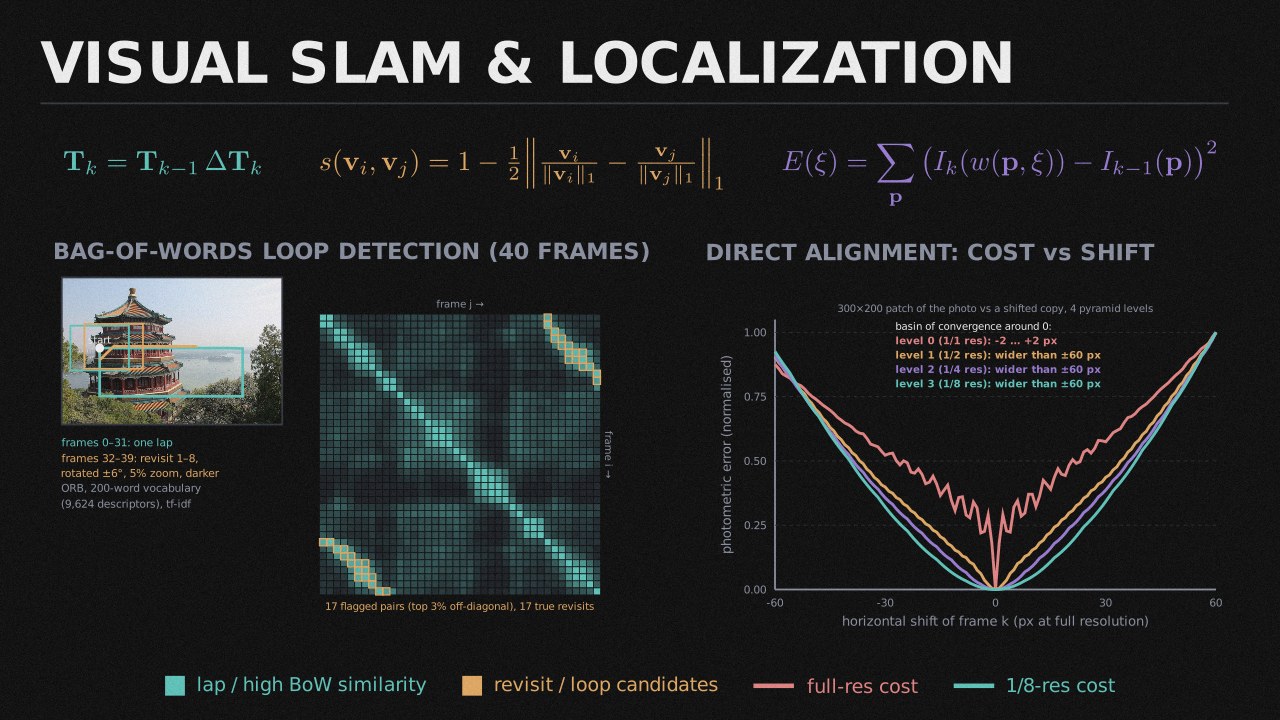
Visual SLAM & Localization

Feature-based and direct SLAM, visual-inertial odometry, deep SLAM, relocalization, and loop closure.

Visual SLAM OverviewORB-SLAM PipelineLSD-SLAM & Direct Methods+4
Pro Only
PRO

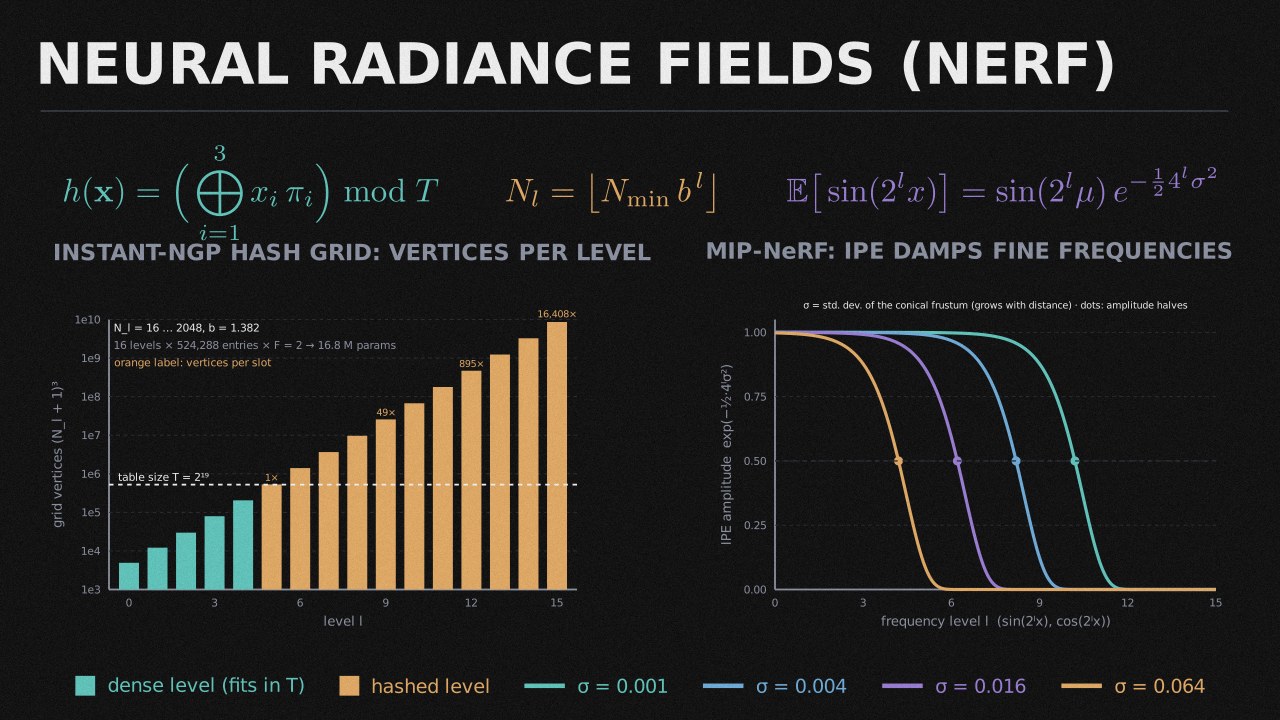
Neural Radiance Fields (NeRF)

Volume rendering, positional encoding, Instant-NGP, Mip-NeRF, and dynamic scene extensions.

Volume Rendering FundamentalsPositional Encoding & MLPsVanilla NeRF Architecture+4
Pro Only
PRO

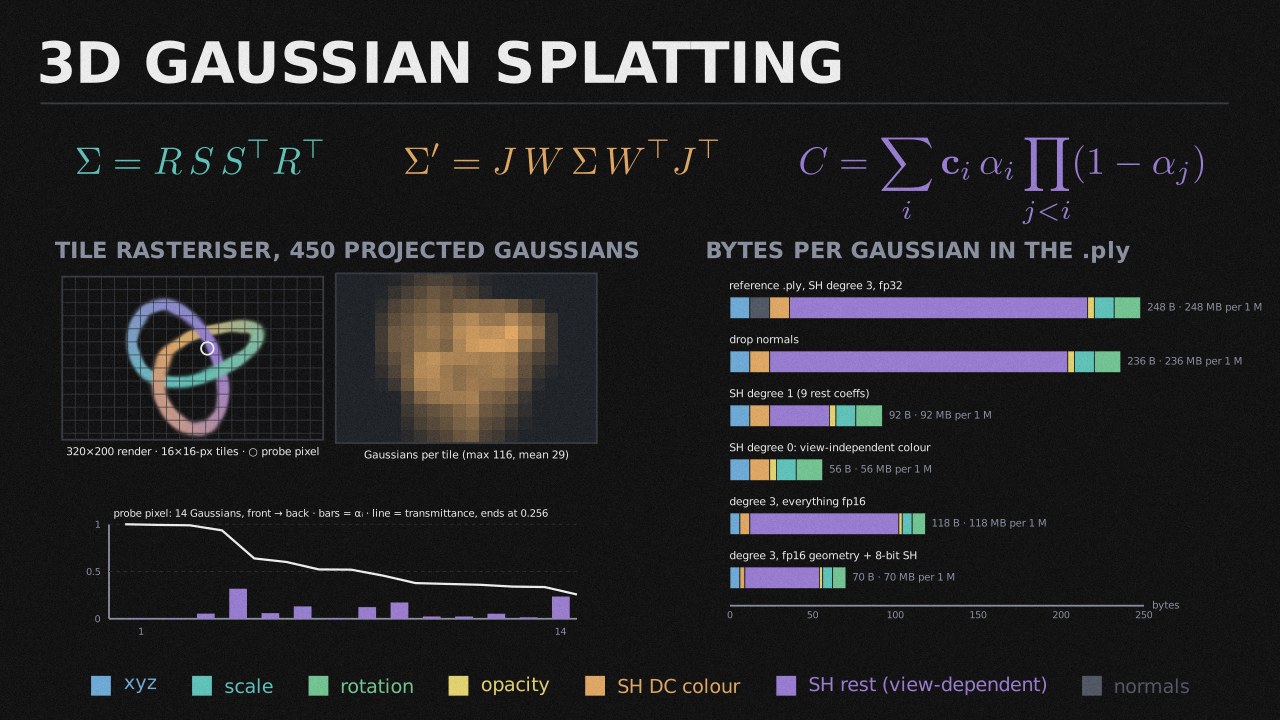
3D Gaussian Splatting

Gaussian representation, differentiable rasterization, optimization, densification, and dynamic 4D extensions.

Gaussian Primitive RepresentationDifferentiable Rasterization3DGS Optimization Pipeline+4
Pro Only
PRO

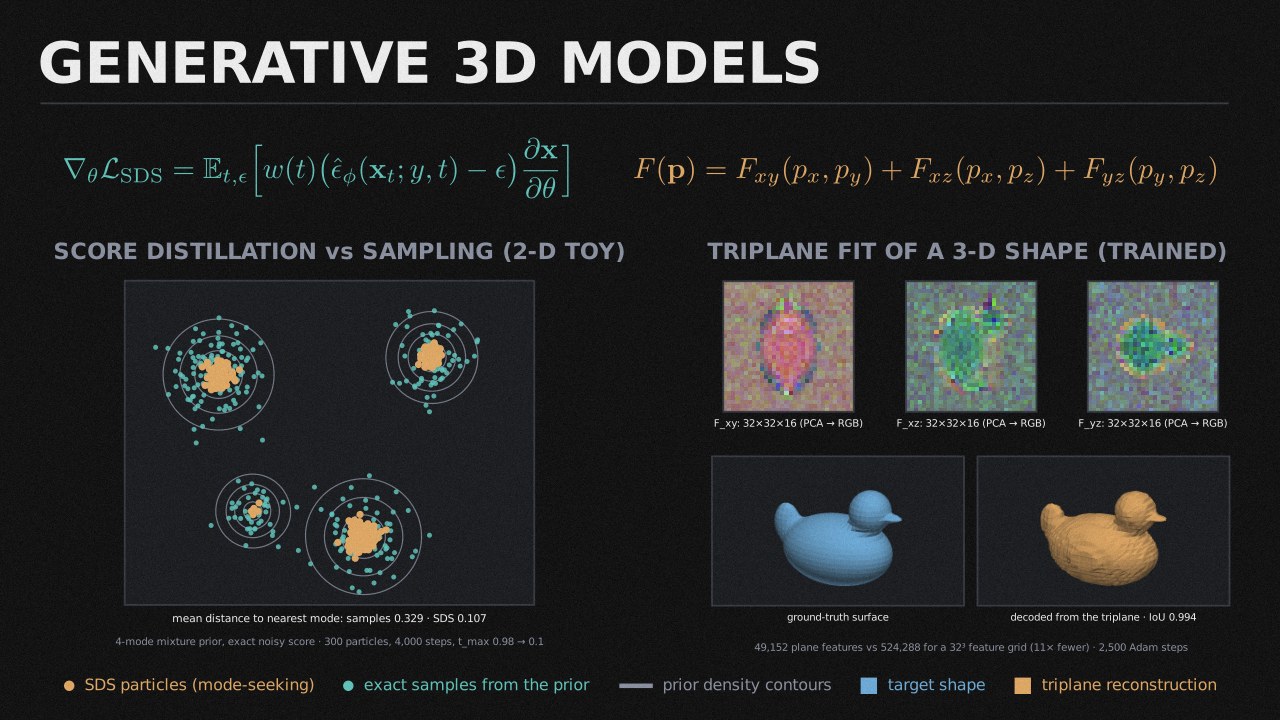
Generative 3D Models

Text-to-3D with DreamFusion, image-to-3D reconstruction, multi-view diffusion, and 3D-aware generation.

Text-to-3D: DreamFusion & SDS LossImage-to-3D ReconstructionMulti-View Diffusion Models+4
Pro Only
Suggestion from founder: Think of 3D Computer Vision as the bridge between the 2D pixel world and the real 3D world we live in. Once you understand how cameras see depth and how neural networks can reconstruct 3D scenes, you will see the world differently — literally.

Curriculum inspired by state-of-the-art 3D vision research, designed to take you from geometric foundations to neural rendering.