Write Real CUDA Kernels in Python
CUDA with Numba Study Plan
A focused 3-chapter path into GPU programming.
3
chapters
12
topics
2
free chapters
The path
4 phases, in the order we recommend.
- 1
- 2
The CUDA Model
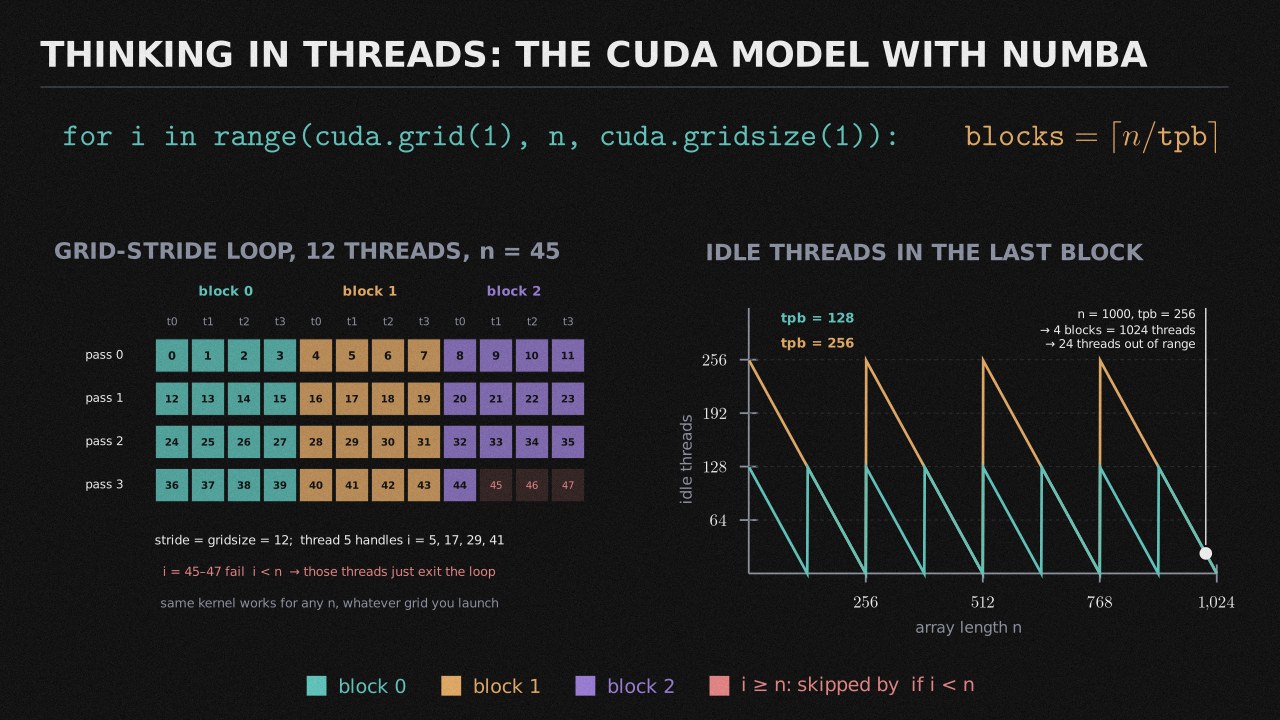
Week 1Ch 1: Threads, Blocks & GridsGlobal index, bounds checks, grid-stride loops
- 3
GPU Memory
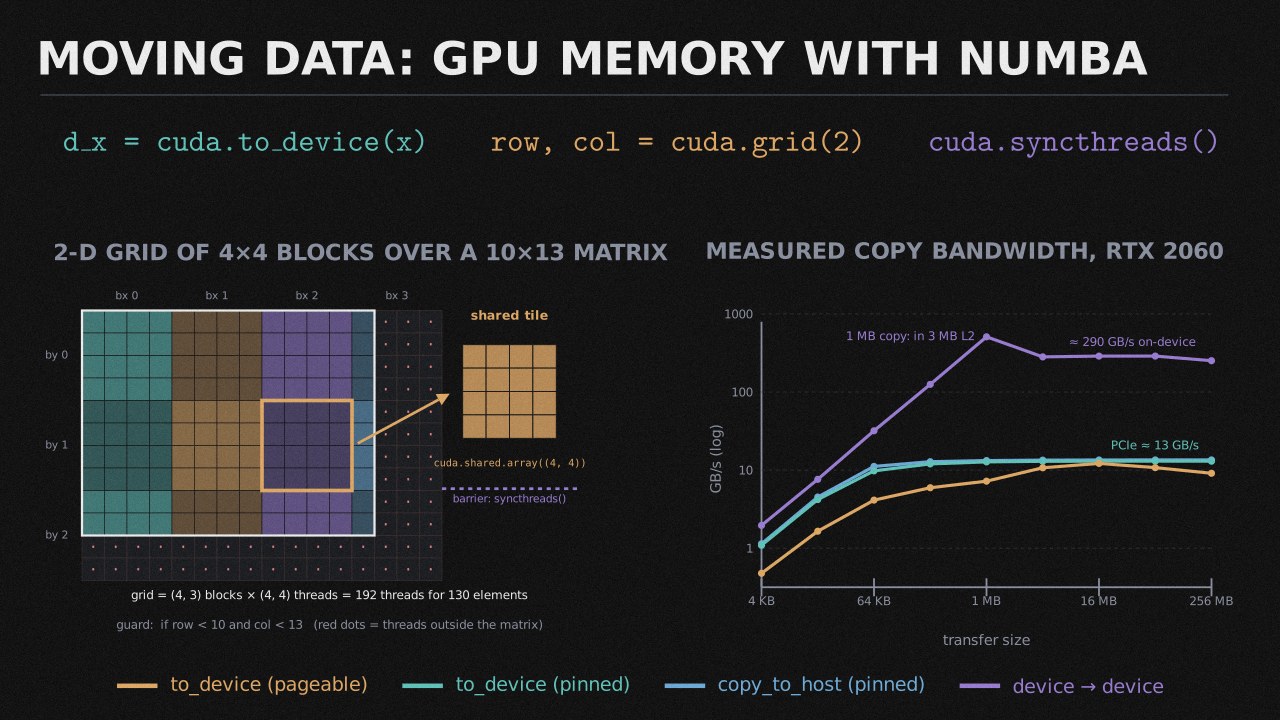
Week 2Ch 2: Memory & 2D Gridsto_device, shared memory, __syncthreads()
- 4
Parallel Patterns
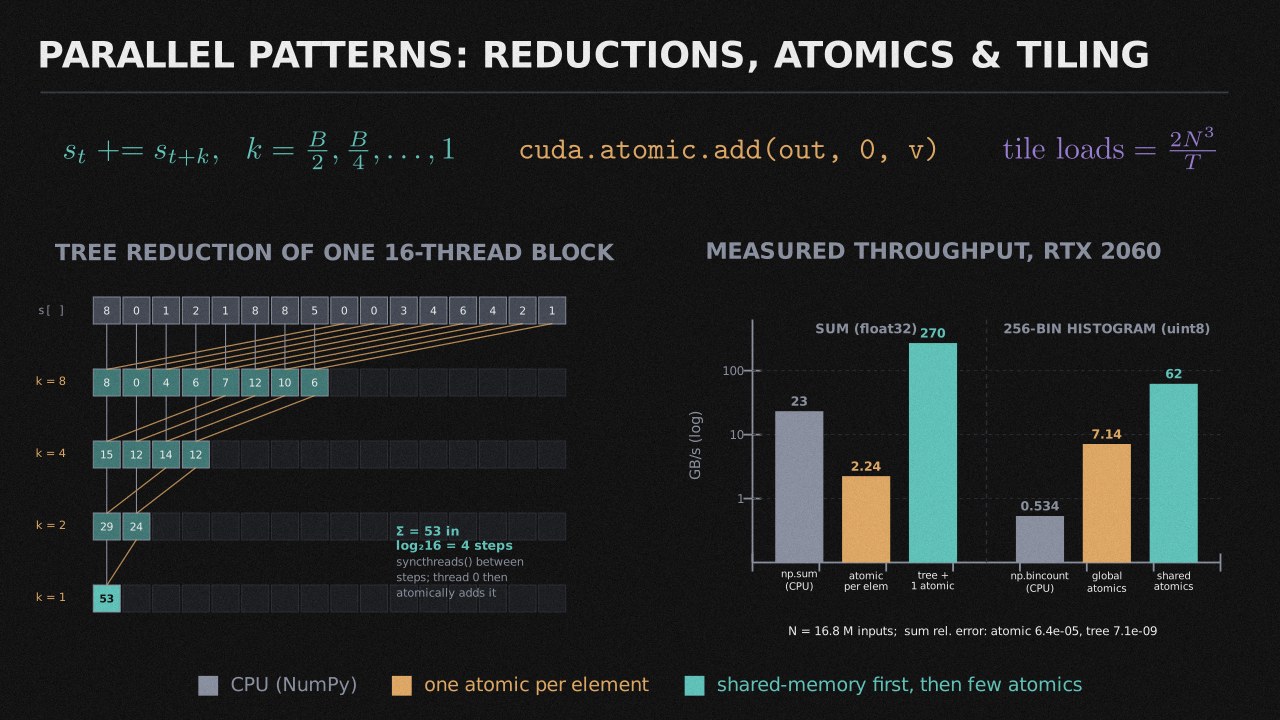
Week 3Ch 3: Reductions, Atomics & TilingTree reductions, atomics, tiled matmul
Tip: Each chapter includes worked examples, math intuition, and a concept map. Practice the kernels in the CUDA Basics with Numba collection.
Pro chapters (2-3) require a premium subscription.
Chapters
2 of 3 chapters free. The rest unlock with Pro.
Practice
Problem sets that drill this plan's topics.
CUDA Basics with Numba
Apply the curriculum hands-on: 25 GPU-kernel problems that run on a real NVIDIA GPU, from vector addition and the global index to shared-memory reductions, atomics, and tiled matrix multiplication.
A short, focused path from the GPU execution model to shared-memory reductions and tiled matrix multiplication — all in Python with Numba.