Write Fast GPU Code in Python
GPU Basics with Triton Study Plan
An 8-chapter curriculum that takes you from "what is a warp?" to writing fused, tiled GPU kernels in Triton that rival hand-tuned CUDA — all in Python.
8
chapters
40
topics
4
free chapters
The path
4 phases, in the order we recommend.
- 1
- 2
GPU Fundamentals
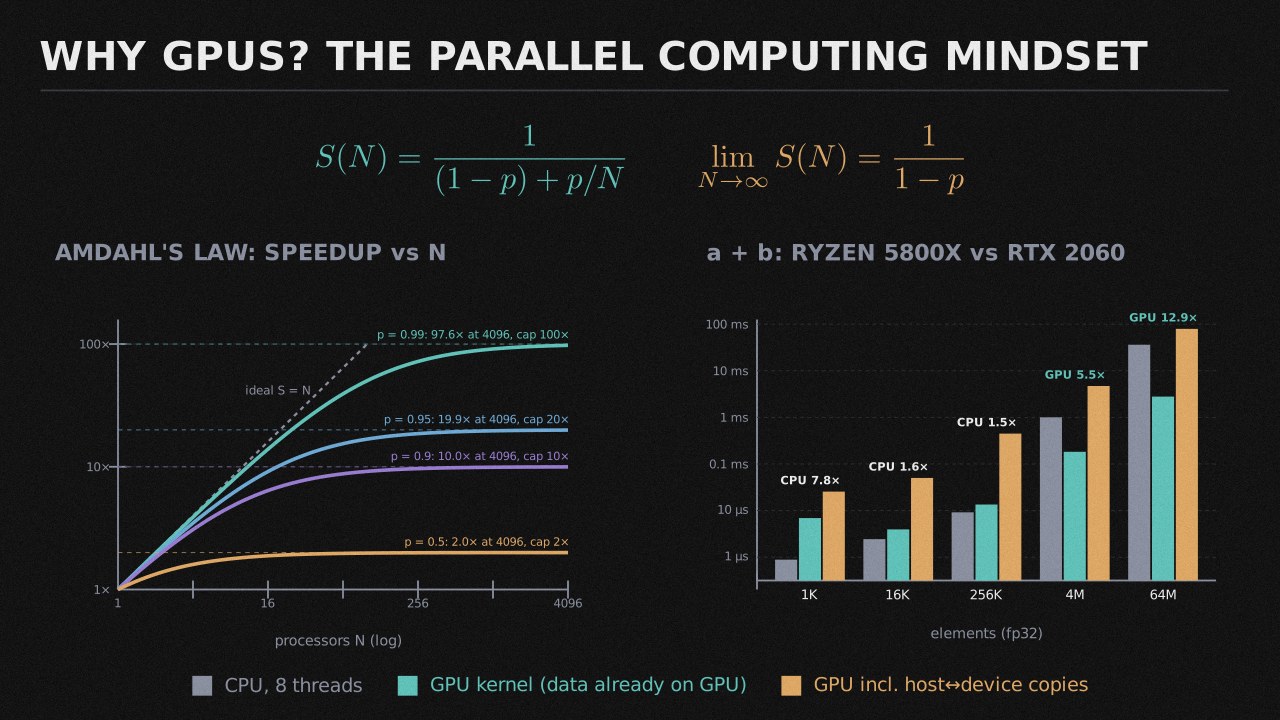
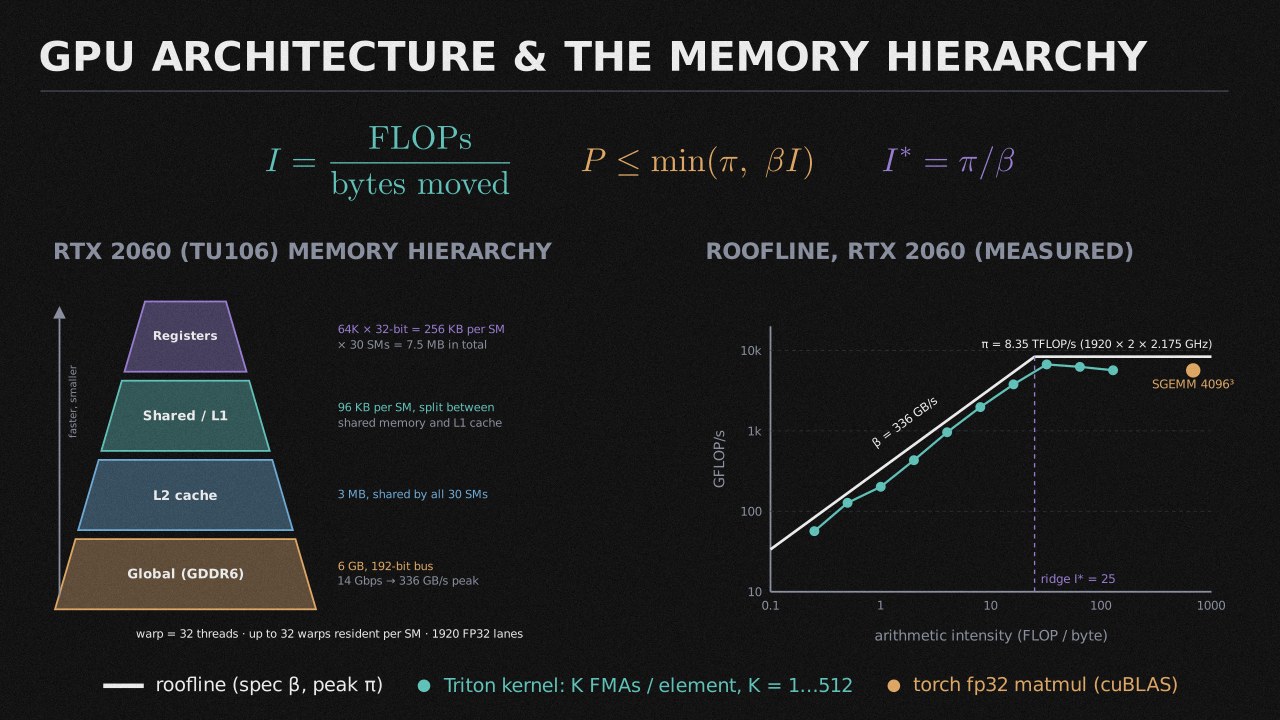
Weeks 1-2Ch 1: Why GPUs?Ch 2: Architecture & MemoryWarps, SMs, the memory hierarchy
- 3
Writing Kernels
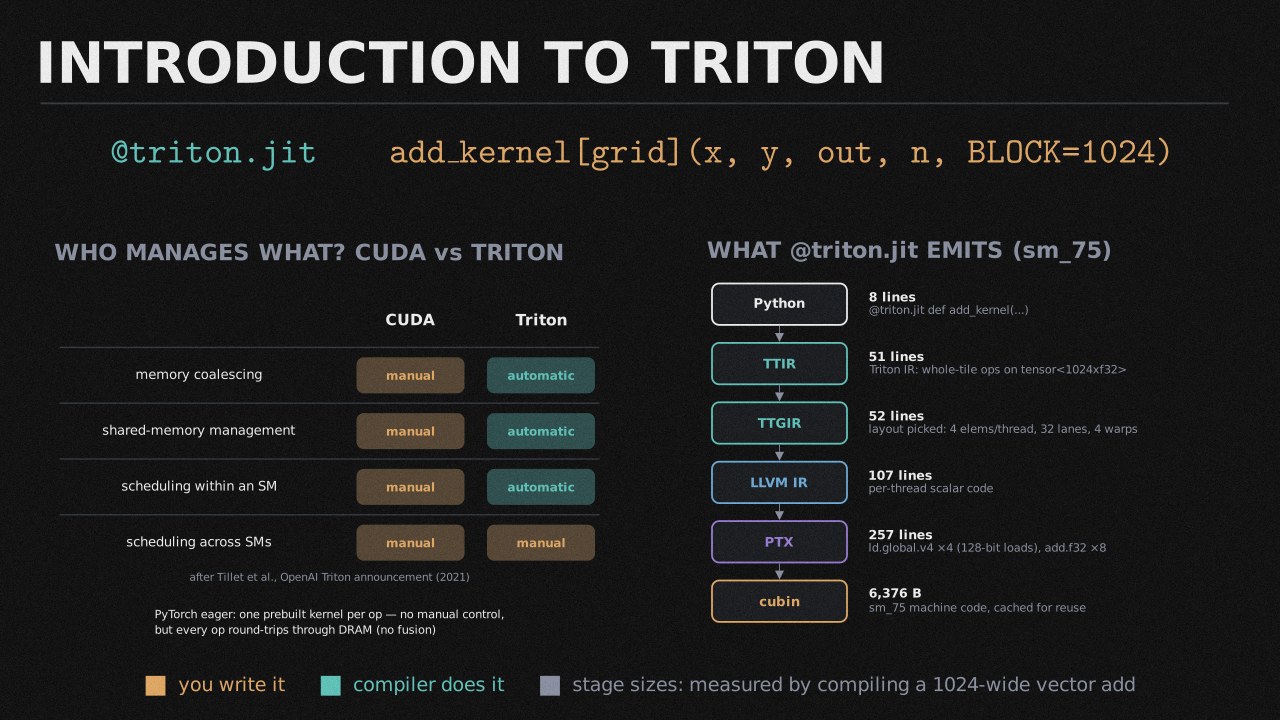
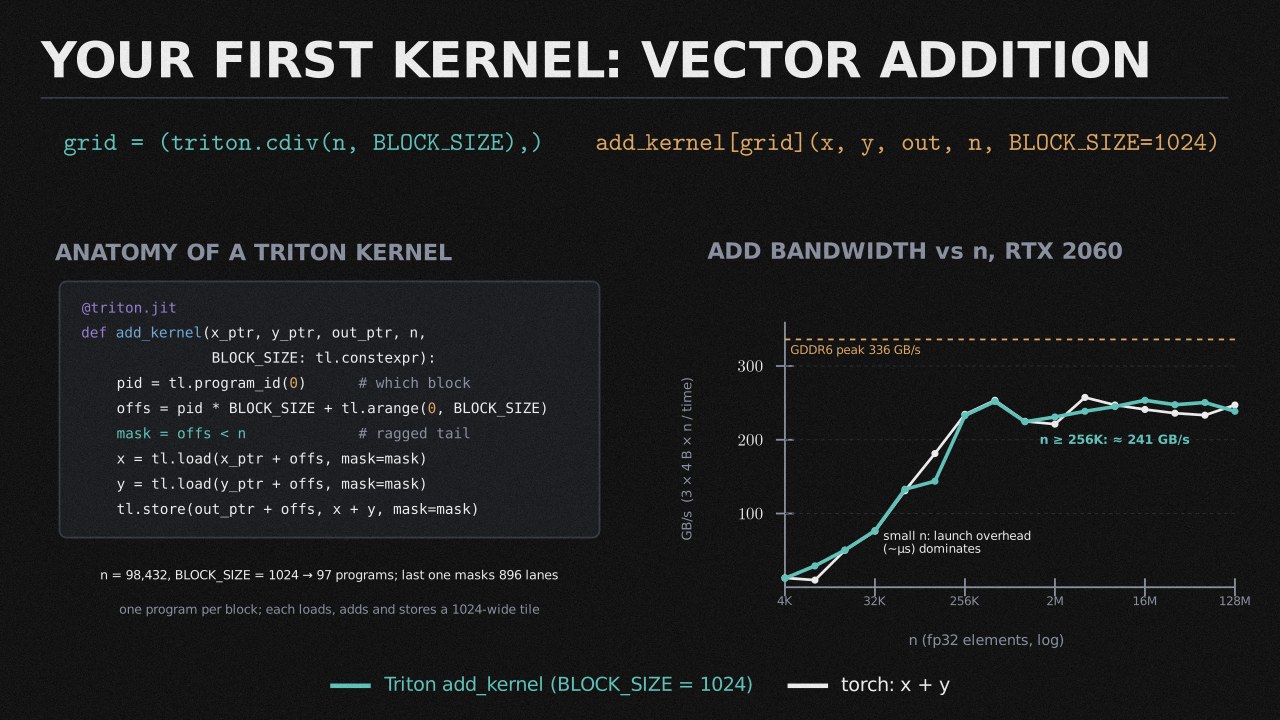
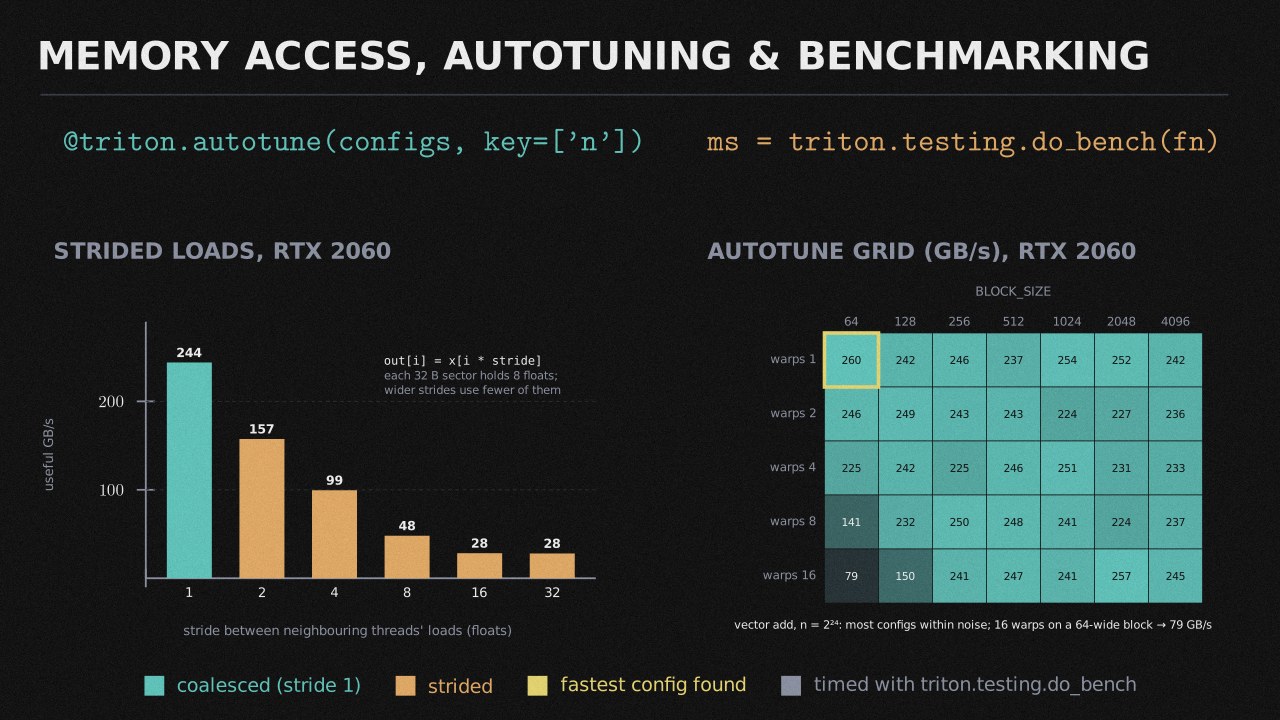
Weeks 2-5Ch 3-4: Triton & Vector AddCh 5: Autotuning & Benchmarksprogram_id, offsets, masking, BLOCK_SIZE
- 4
High Performance
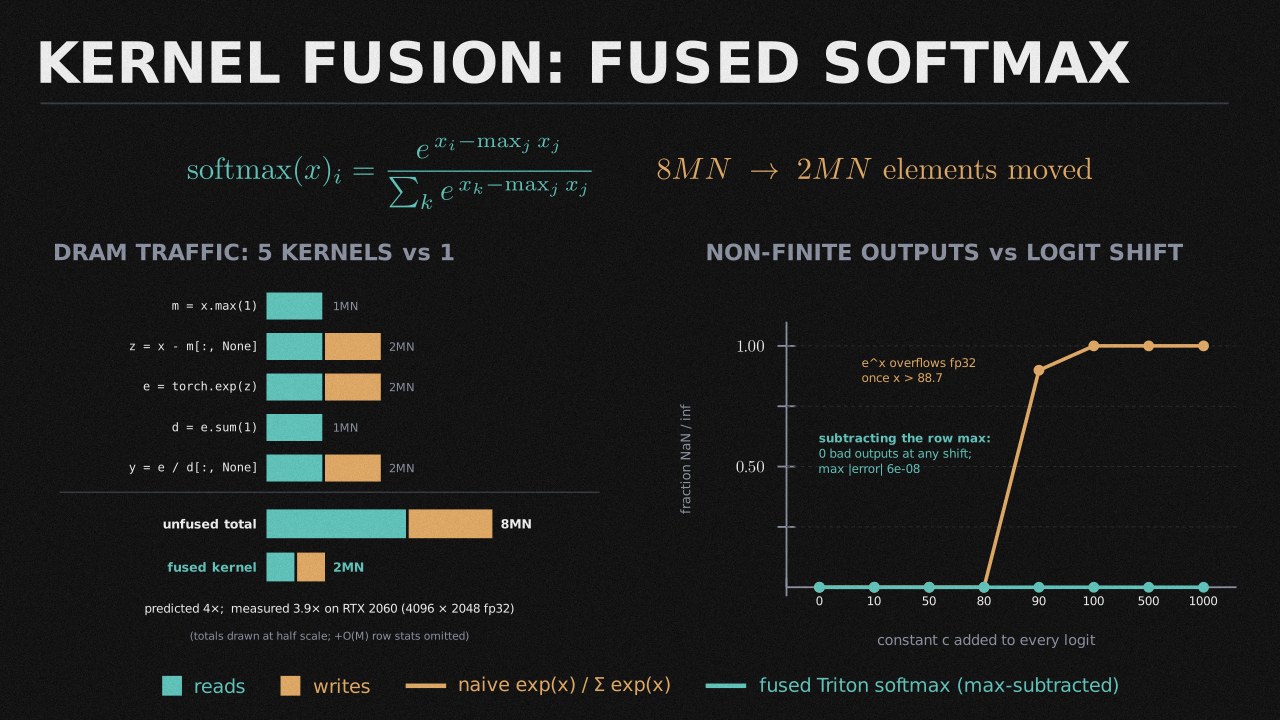
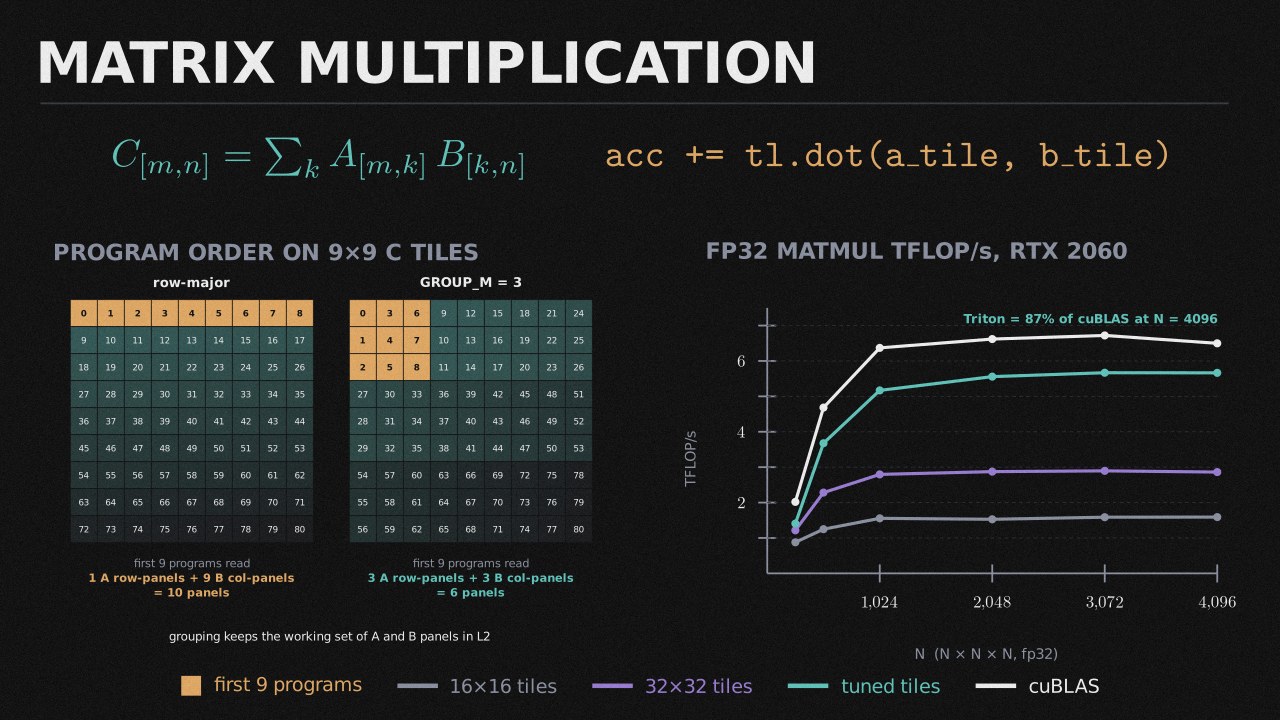
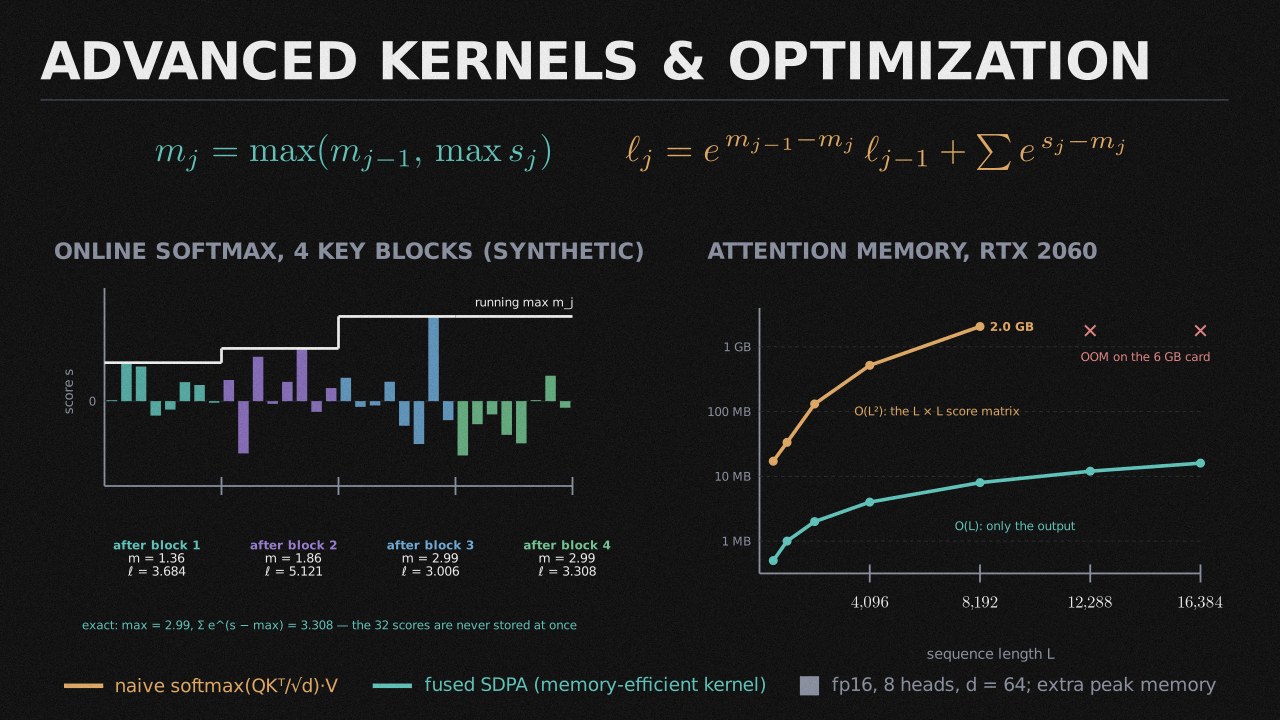
Weeks 5-8Ch 6-7: Fusion & MatmulCh 8: Advanced KernelsFused softmax, tiled matmul, attention
Tip: Each chapter includes interactive demos and theory exercises.
Pro chapters (3-8) require a premium subscription.
Chapters
4 of 8 chapters free. The rest unlock with Pro.
Practice
Problem sets that drill this plan's topics.
Triton Programming
Apply the curriculum hands-on: 26 GPU-kernel problems that run on a real NVIDIA GPU, from vector addition to fused softmax, tiled matmul, and a single-query attention kernel.
Curriculum designed to take you from GPU fundamentals to writing high-performance Triton kernels that approach cuBLAS-level speed.