PIXELBANKv8.2.1
Menu
From Transformers to Production LLMs

LLM Study Plan

A comprehensive 14-week curriculum covering large language models from transformers and tokenization to RLHF, RAG, agents, and deployment.

13 Chapters14 WeeksInteractive Demos

Recommended Study Path

Phase 1

Prerequisites

Foundations Study Plan

  • Python Foundations
  • NumPy & Data Wrangling
  • Mathematical Foundations

Complete the Foundations study plan first →

Phase 2

Foundations

Weeks 1-4

  • Ch 1-2: Intro & Tokenization
  • Ch 3-4: Transformers & Pretraining

Core concepts: attention, embeddings, architectures

Phase 3

Training & Apps

Weeks 5-10

  • Ch 5-6: Fine-tuning & RLHF
  • Ch 7-9: Prompts, RAG & Agents

LoRA, alignment, retrieval, tool use

Phase 4

Advanced

Weeks 11-14

  • Ch 10-11: Evaluation & Multimodal
  • Ch 12-13: Safety & Deployment

Benchmarks, multimodal, safety, optimization

Tip: Each chapter includes interactive demos, theory exercises, and practice problems.
Pro chapters (4-13) require a premium subscription.

All Chapters

1

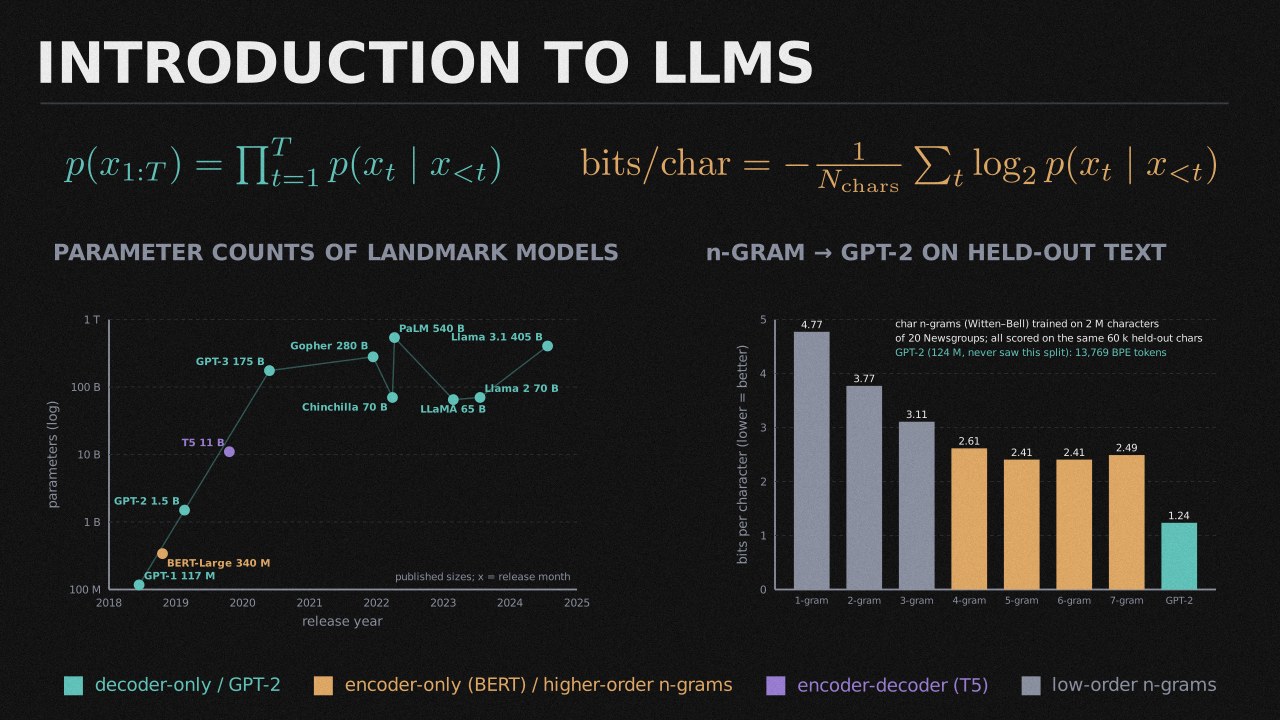
Introduction to LLMs

What are LLMs, history of language models, key architectures, scaling laws, applications, and limitations.

What are LLMsHistoryKey Architectures+3
Start Learning
2

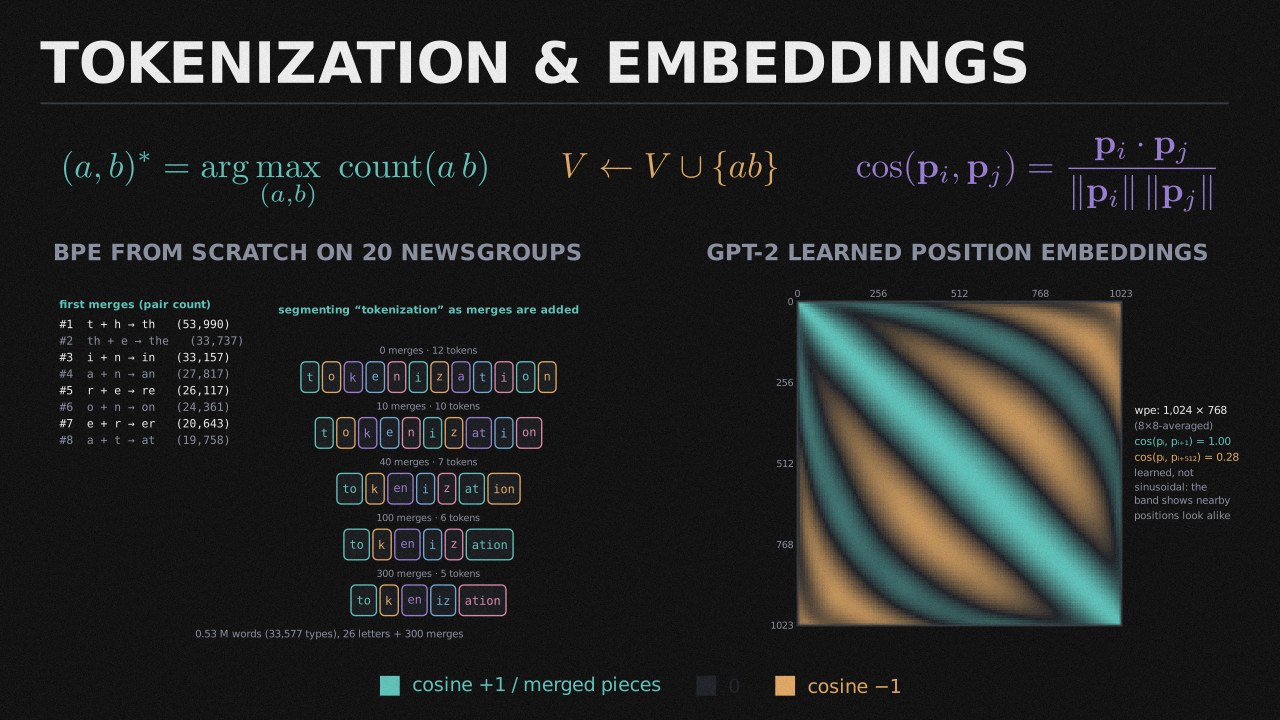
Tokenization & Embeddings

Byte-pair encoding, WordPiece and SentencePiece tokenizers, token vocabularies, word embeddings, and positional encodings.

BPEWordPiece/SentencePieceToken Vocabularies+2
Start Learning
3

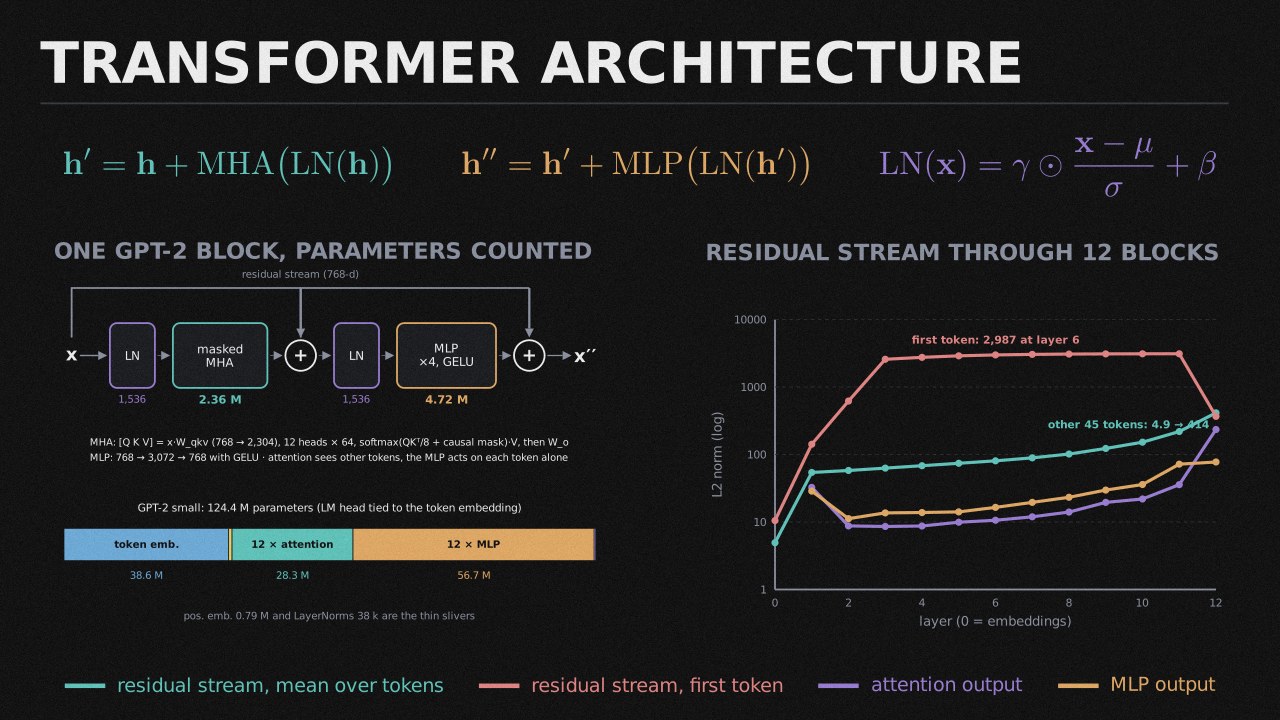
Transformer Architecture

Self-attention mechanism, multi-head attention, feed-forward networks, layer normalization, residual connections, and full transformer blocks.

Self-AttentionMulti-Head AttentionFFN+3
Start Learning
4

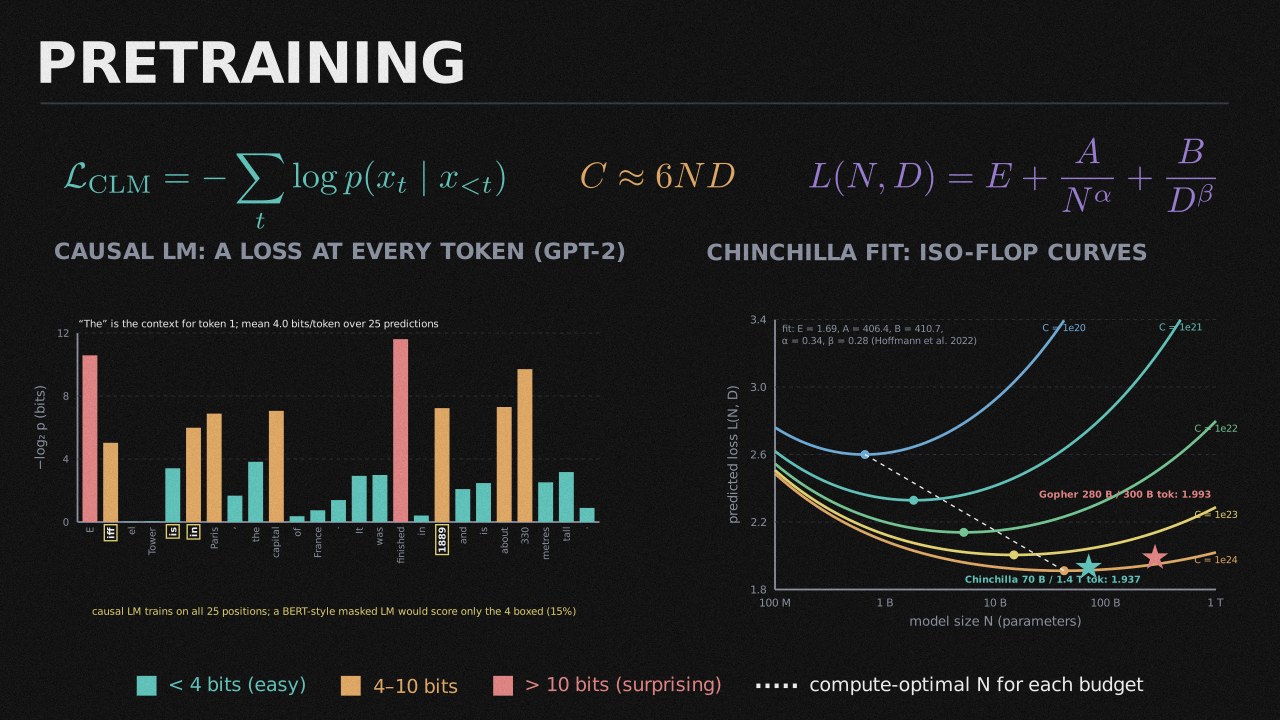
Pretraining

Language modeling objectives, causal vs masked language modeling, training data curation, infrastructure, and scaling strategies.

Language Modeling ObjectivesCausal vs Masked LMTraining Data+2
Start Learning
PRO

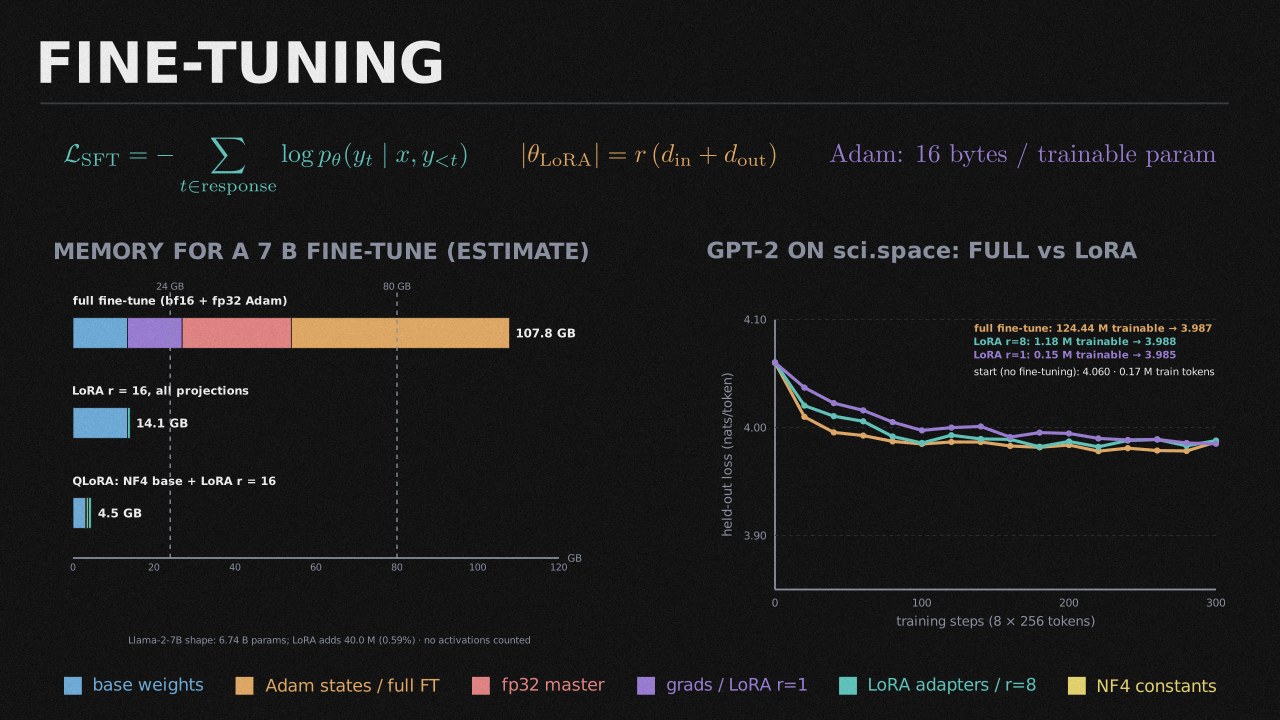
Fine-tuning

Transfer learning for LLMs, full fine-tuning, parameter-efficient methods like LoRA and QLoRA, instruction tuning, and data preparation.

Transfer LearningFull Fine-tuningLoRA/QLoRA+2
Pro Only
PRO

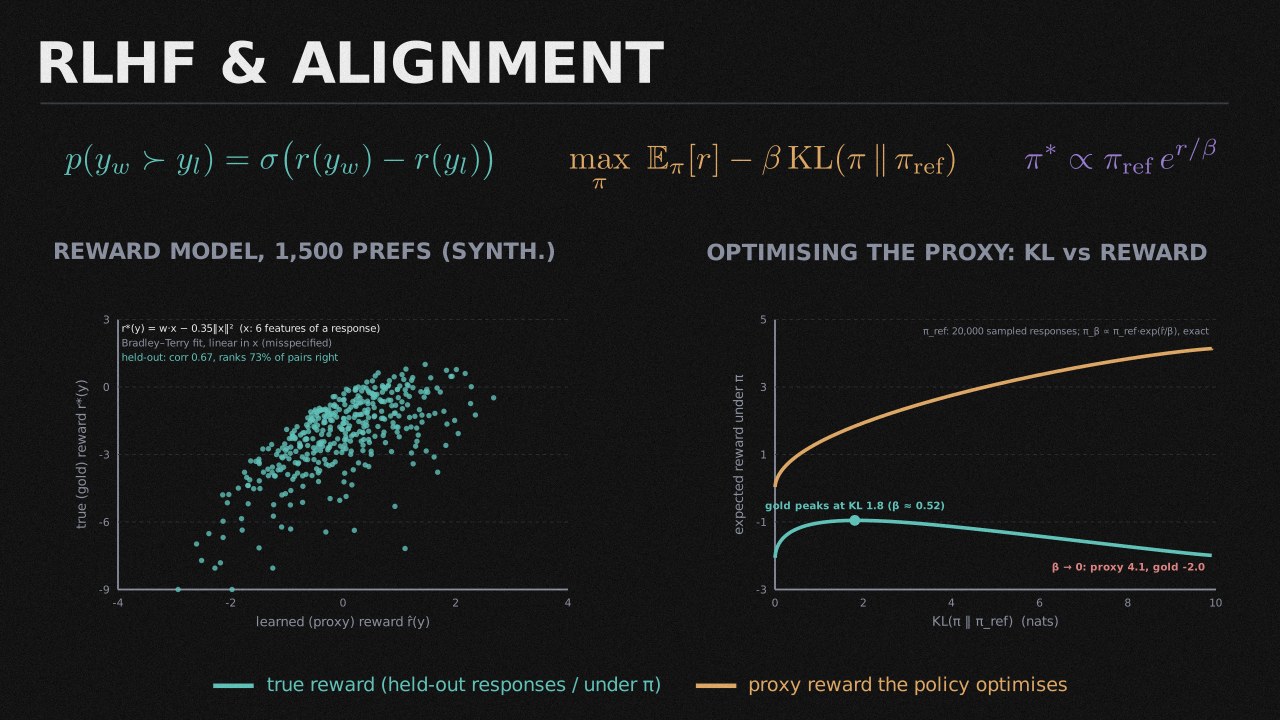
RLHF & Alignment

Reward modeling, PPO for language models, Direct Preference Optimization, Constitutional AI, and preference data collection.

Reward ModelingPPODPO+2
Pro Only
PRO

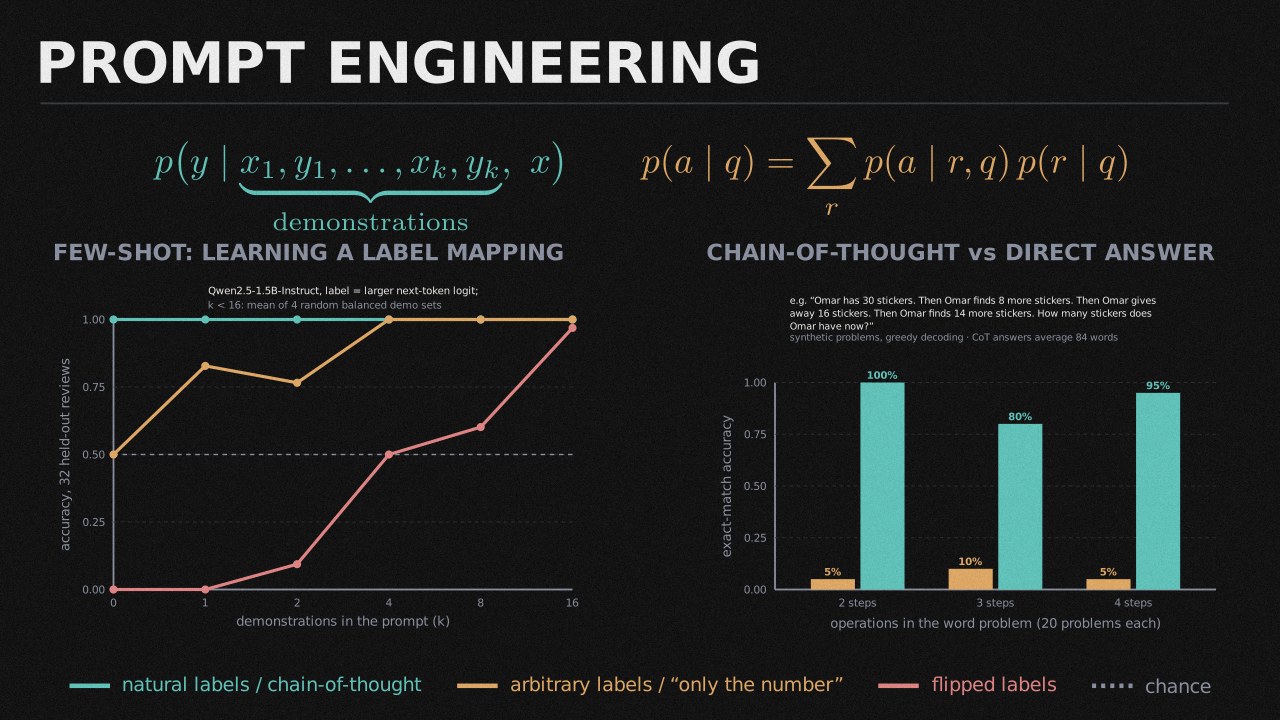
Prompt Engineering

Zero-shot and few-shot prompting, chain-of-thought reasoning, system prompts, and structured output generation.

Zero-shotFew-shotChain-of-Thought+2
Pro Only
PRO

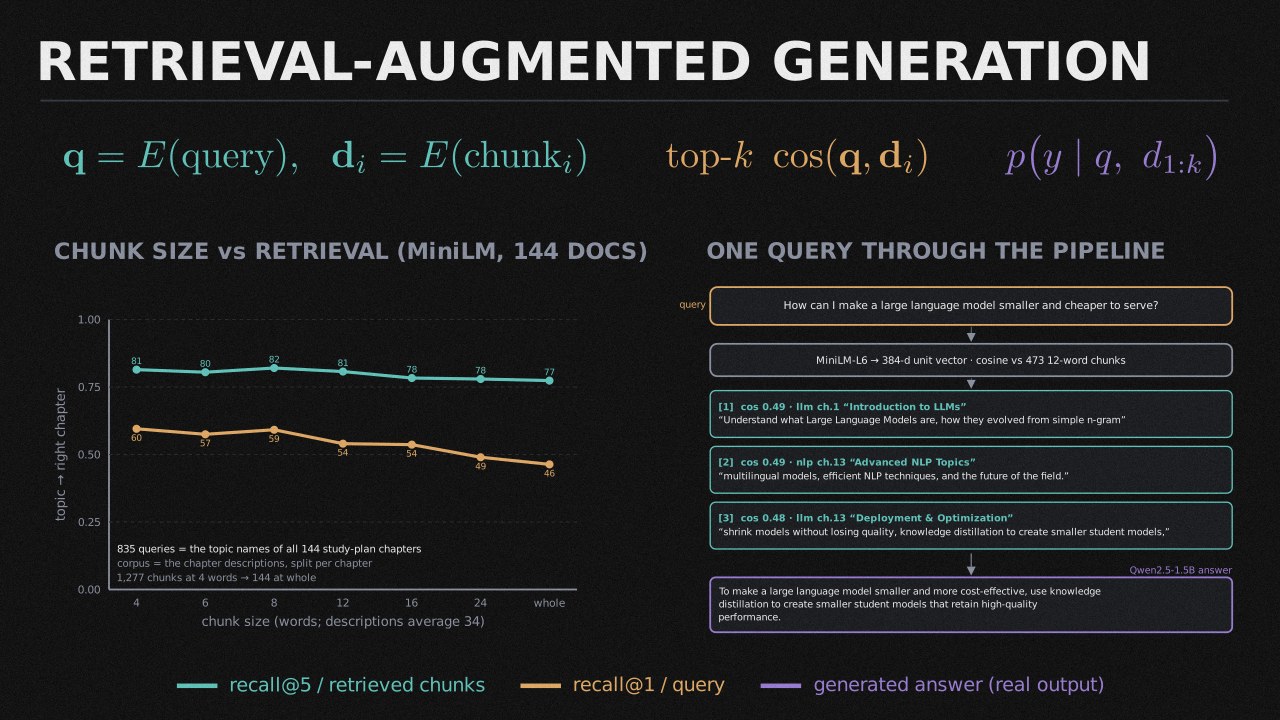
Retrieval-Augmented Generation

Vector databases, embedding models, chunking strategies, RAG pipelines, and advanced retrieval techniques.

Vector DBsEmbedding ModelsChunking+2
Pro Only
PRO

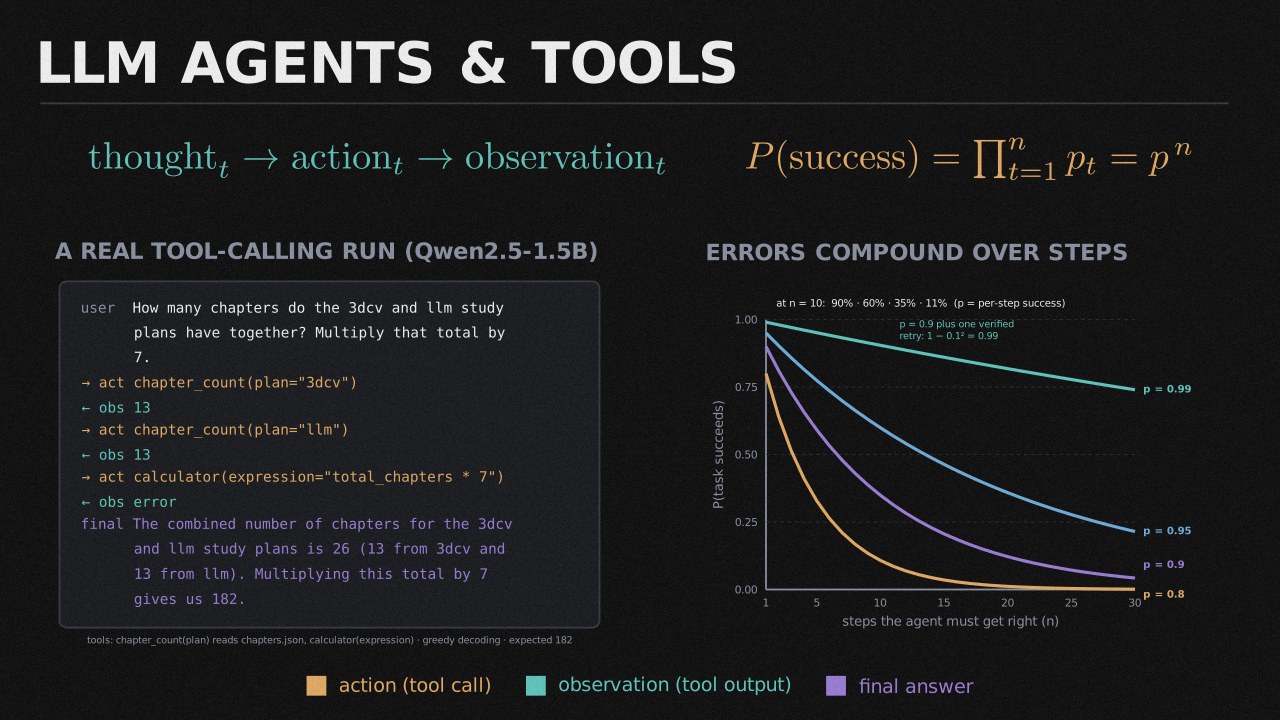
LLM Agents & Tools

Tool use patterns, ReAct framework, multi-agent systems, memory architectures, and agent frameworks.

Tool UseReActMulti-Agent+2
Pro Only
PRO

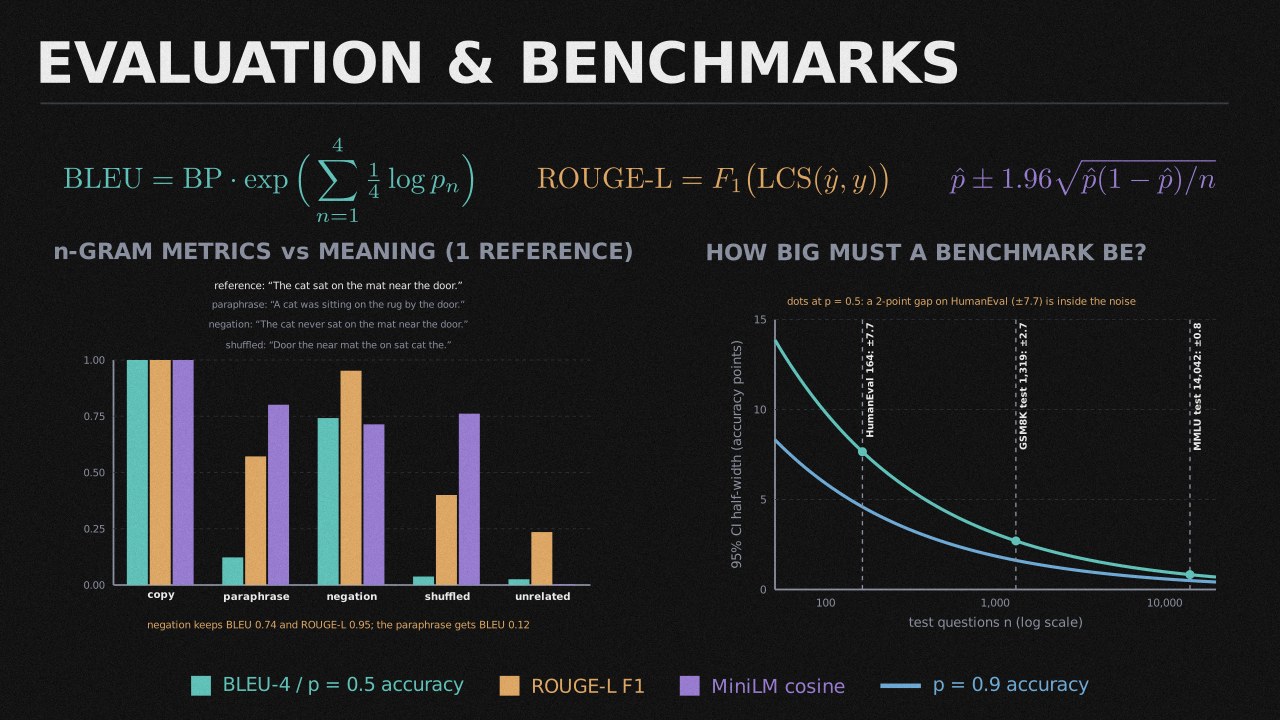
Evaluation & Benchmarks

Perplexity, BLEU and ROUGE metrics, human evaluation, popular benchmarks, and red teaming strategies.

PerplexityBLEU/ROUGEHuman Eval+2
Pro Only
PRO

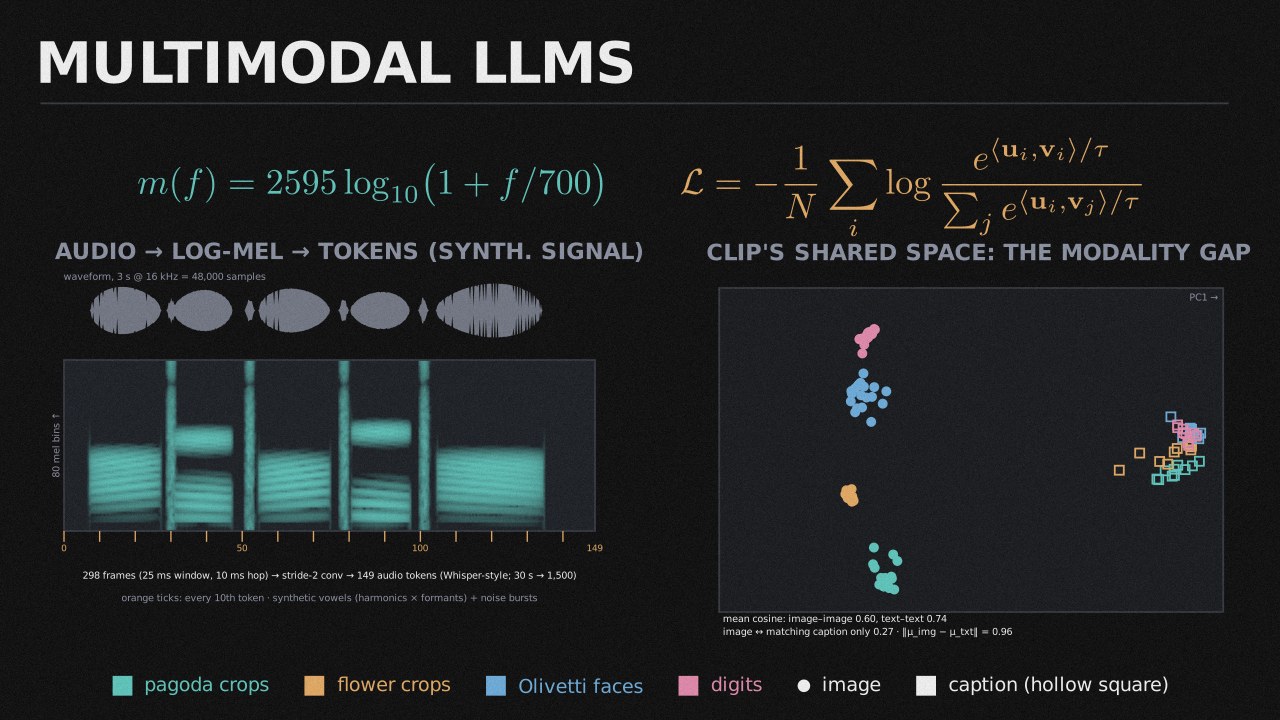
Multimodal LLMs

Vision-language models, audio integration, cross-modal attention, CLIP and its variants, and multimodal applications.

Vision-LanguageAudioCross-Modal Attention+2
Pro Only
PRO

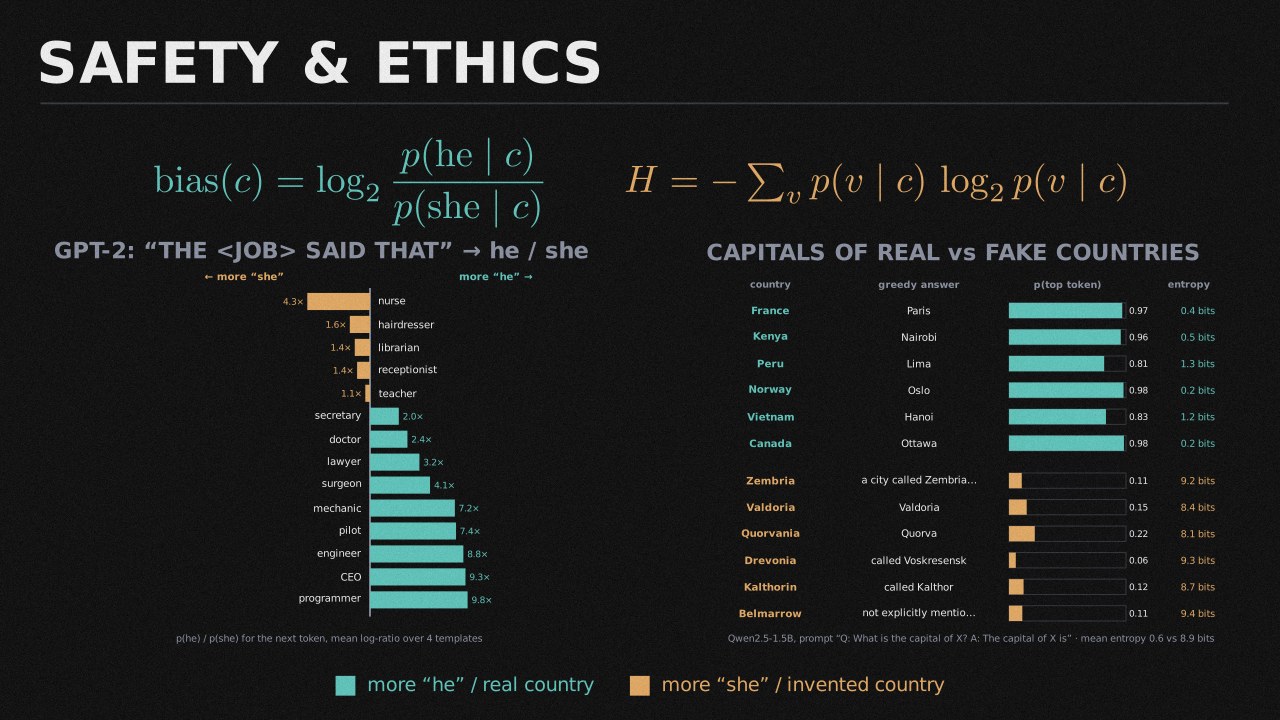
Safety & Ethics

Hallucination detection and mitigation, bias in language models, toxicity filtering, guardrails, and responsible AI practices.

HallucinationsBiasToxicity+2
Pro Only
PRO

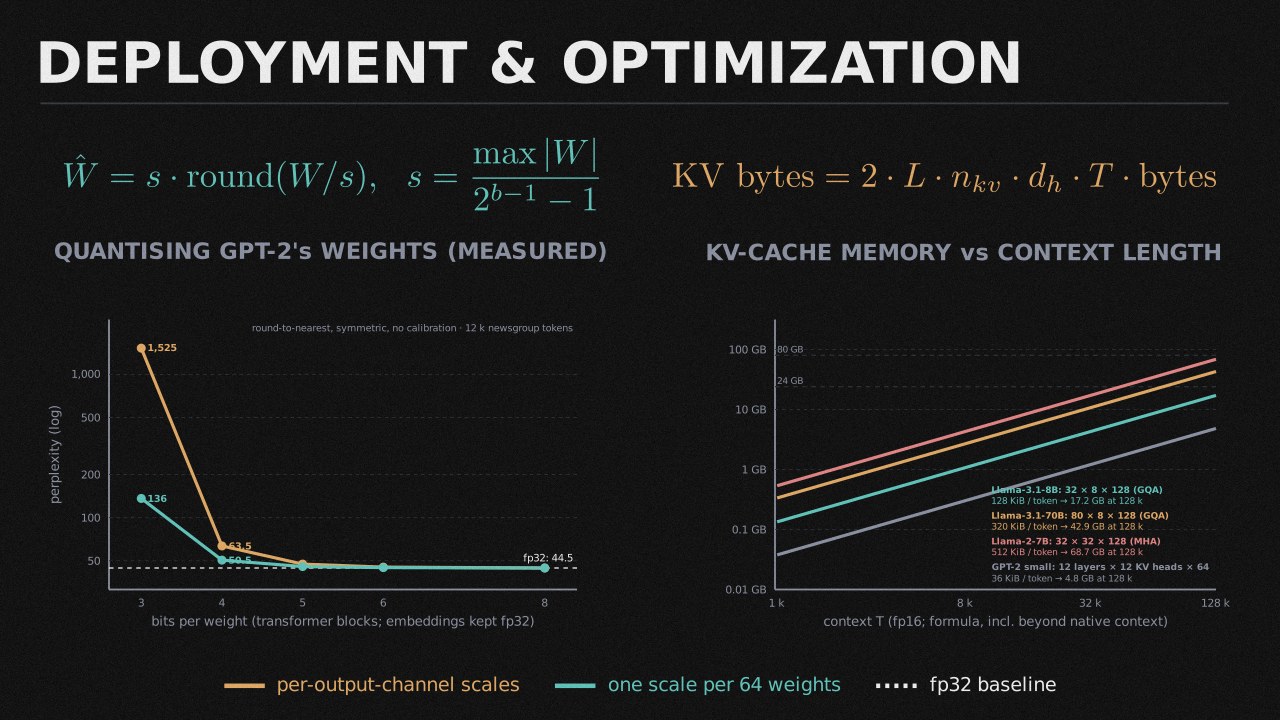
Deployment & Optimization

Model quantization, knowledge distillation, serving infrastructure, inference optimization, and cost management.

QuantizationDistillationServing+2
Pro Only

Timed Tests

View all
Foundations Test
Ch 1-3 45 min
Training & Fine-tuning TestPRO
Ch 4-6 45 min
Applications TestPRO
Ch 7-9 45 min
Evaluation & Multimodal TestPRO
Ch 10-11 45 min
Safety & Deployment TestPRO
Ch 12-13 45 min

Practice Problem Sets

Sharpen your skills with coding challenges and system design problems.

Curriculum designed to take you from LLM fundamentals to advanced deployment and production optimization.